Selenite, Aragonite and Siderite
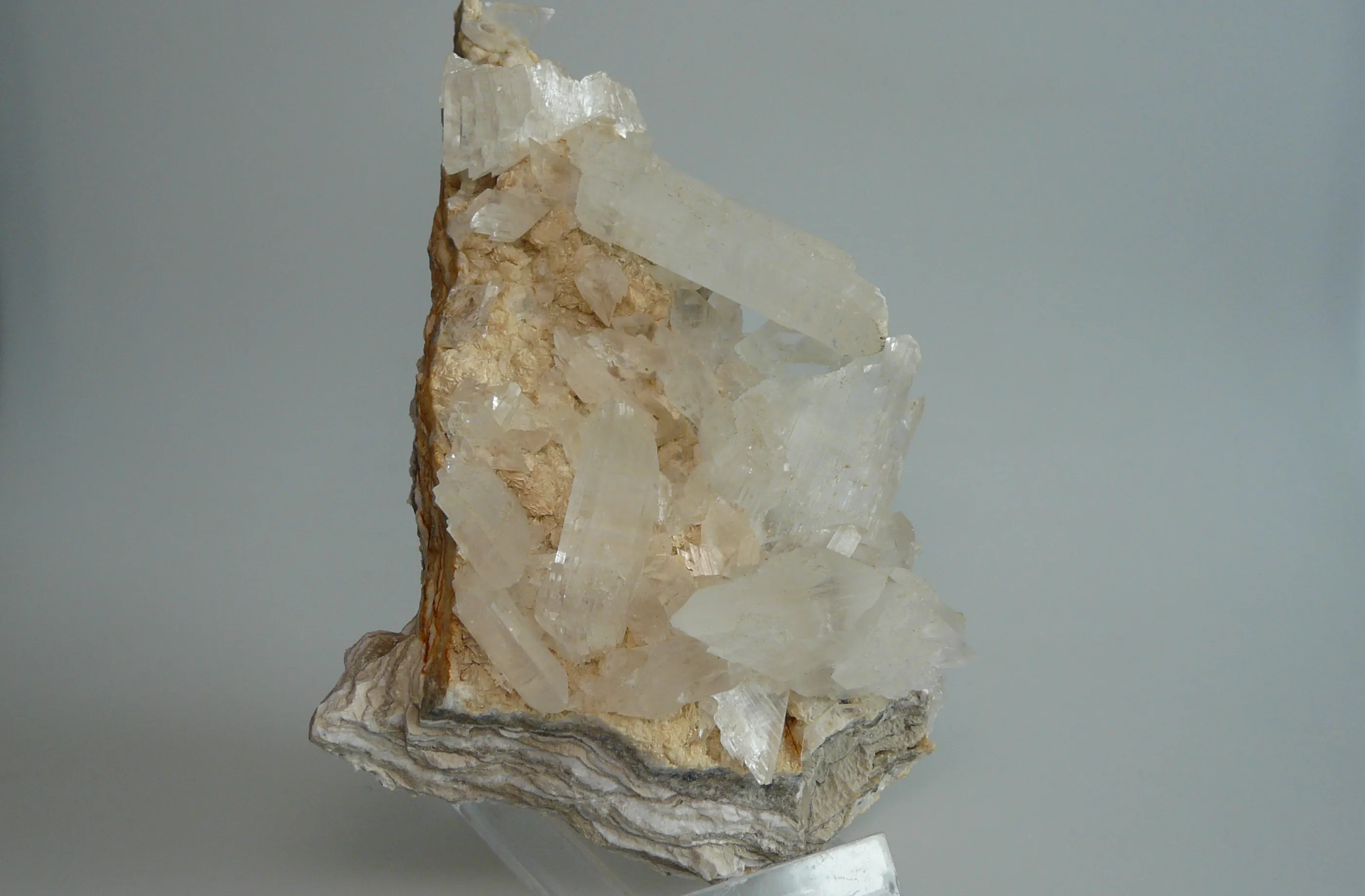
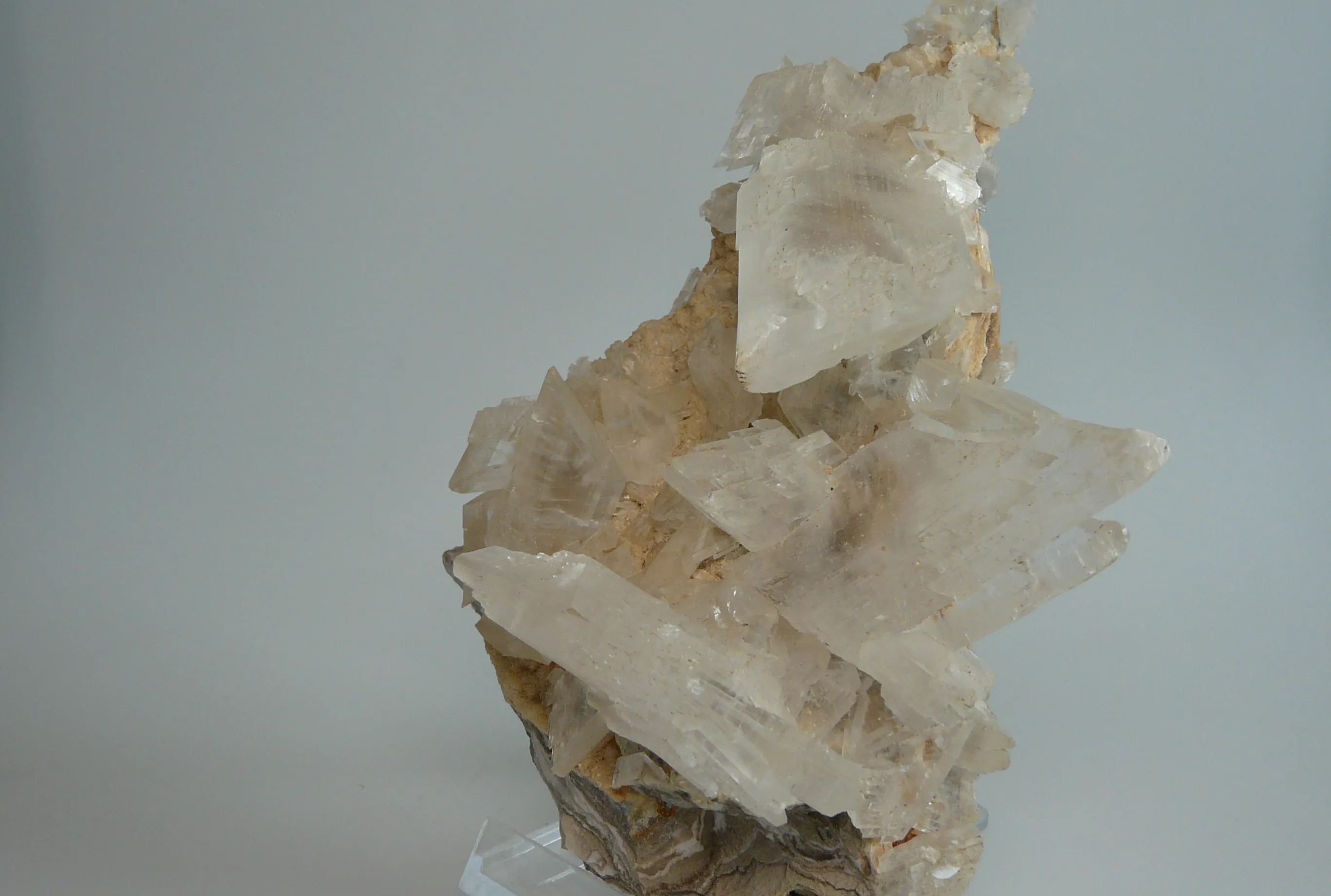
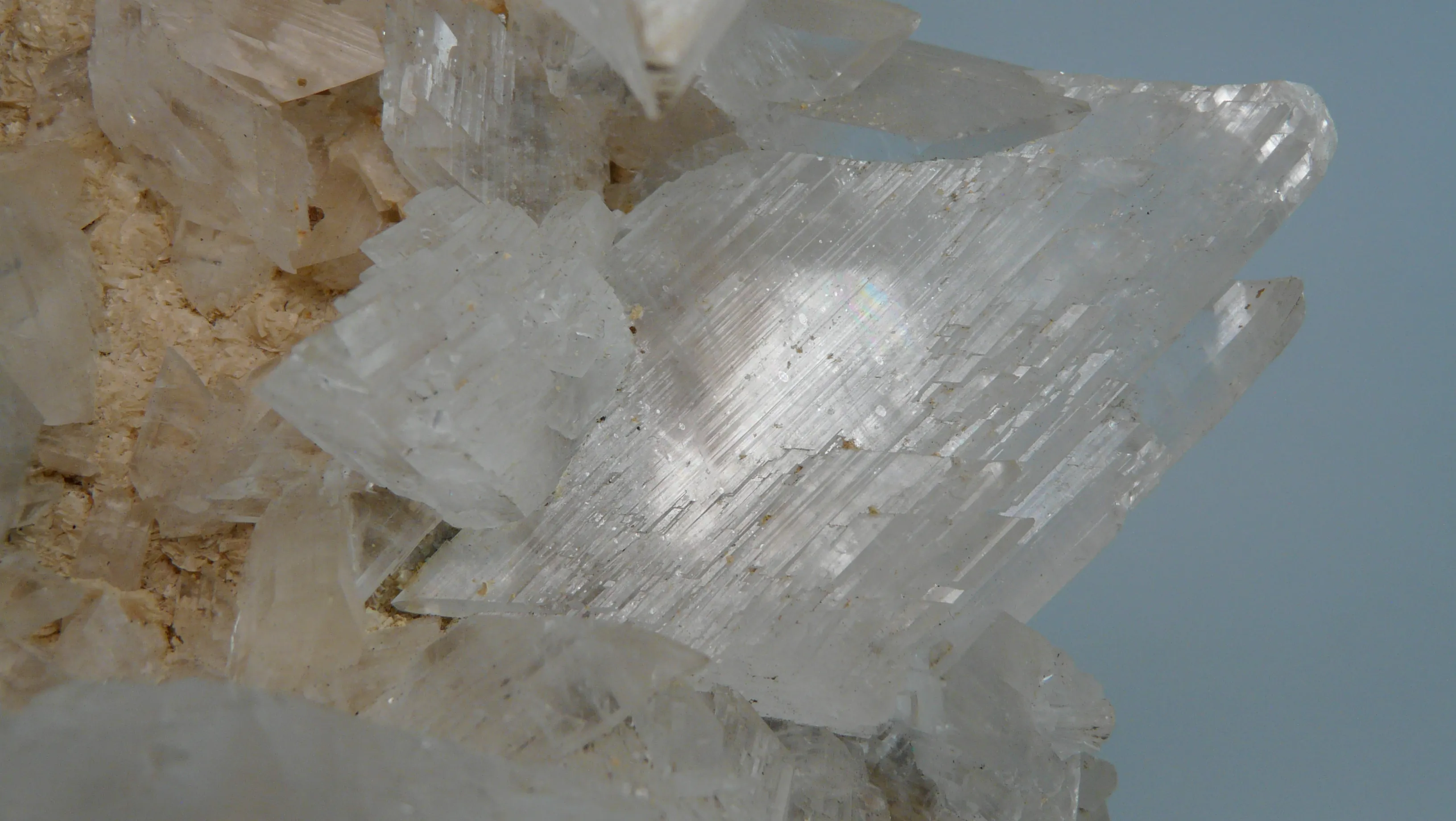
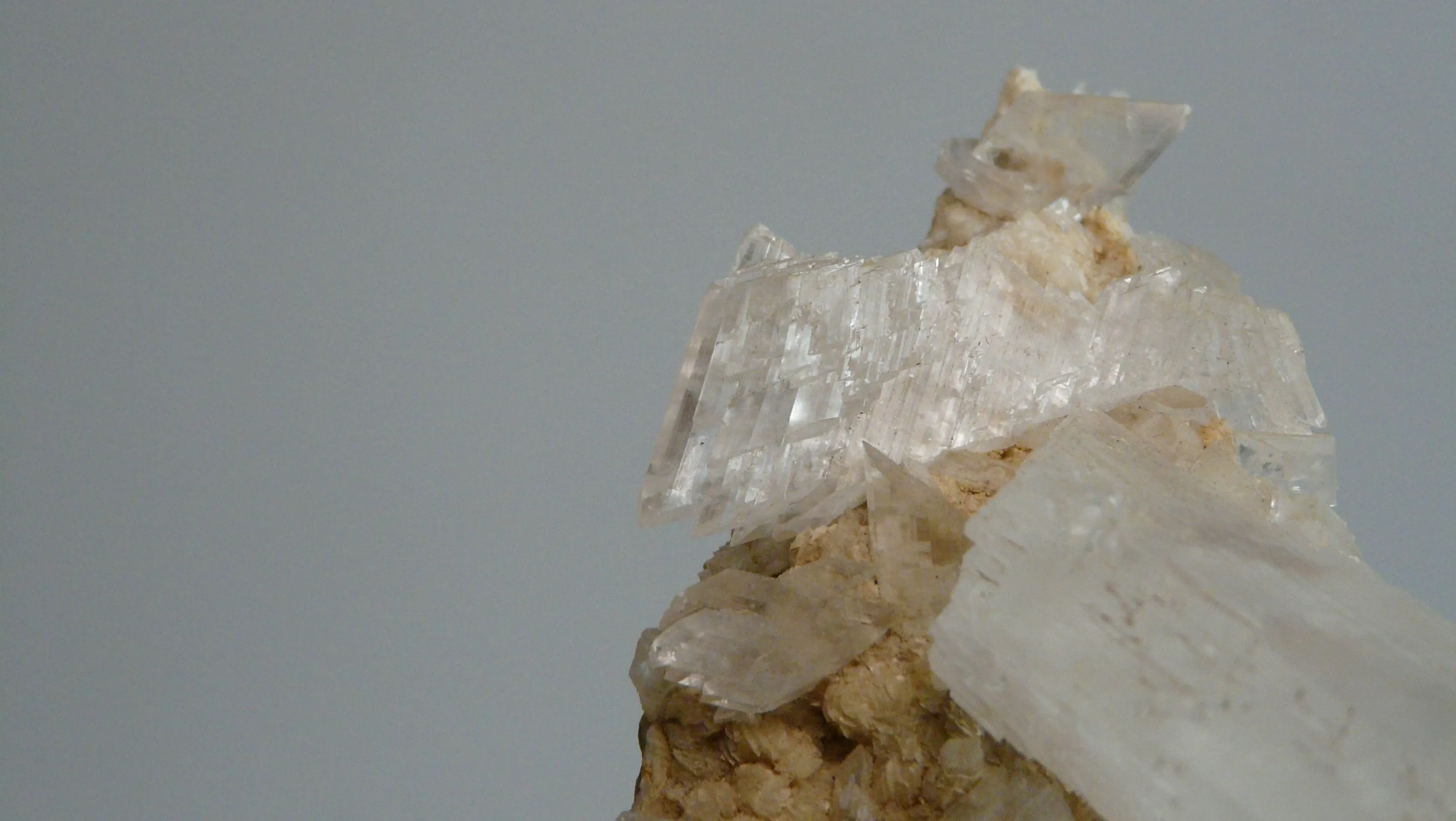
| ID | 586 | |
|---|---|---|
| Mineral |
Selenite
Aragonite Siderite |
|
| Location | Cavnic Mine - Cavnic - Maramures - Romania | |
| Fluorescence | LW-UV: close SW-UV: close |
|
| Mindat.org |
View Selenite information at mindat.org View Aragonite information at mindat.org View Siderite information at mindat.org |
|
Mindat data
| ID | 5527 |
|---|---|
| Long ID | 1:1:5527:3 |
| IMA Status |
0 1 |
| Variety of | 1784 |
| Entry type | 2 |
| Description | The name 'selenite' is mostly synonymous with gypsum but has been used historically to describe the transparent variety, as opposed to satin spar gypsum for the fibrous variety and alabaster for the fine-grained massive form. The original name was ... |
| Diapheny | Transparent |
| Colour | Colourless, light tints due to included matter |
| Hardness (min) | 2.0 |
| Hardness (max) | 2.0 |
| About the name | From the Greek σεληνη, for "moon", in allusion to the moon-like white reflections of the mineral or to the quality of the light transmitted by translucent gypsum slabs of cleavages used as windows. |
| Crystal System | Monoclinic |
| Fracture type | Micaceous |
| ID | 307 |
|---|---|
| Long ID | 1:1:307:6 |
| Formula |
Ca(CO3)
|
| IMA Status |
0 1 |
| Other Occurrences | As speleothems in limestone caves; as pisolites, sinters and massive lamellar deposits at geysers and hot springs; as seafloor oolites; with siderite in iron deposits; with calcite and dolomite and other magnesium minerals in altered serpentinites, dunites and peridotites; and as a replacement mineral in various rock types and ore deposits, formed from low-temperature and pressure aqueous solutions. |
| Discovery Year | 1797 |
| Diapheny | Transparent,Translucent |
| Cleavage | On {010} distinct; On {110} and {011} very indistinct. |
| Tenacity | brittle |
| Colour | Colorless to white or grey, often stained various hues by impurities, such as blue, green, red or violet; colourless in transmitted light. |
| Hardness (min) | 3.5 |
| Hardness (max) | 4.0 |
| Luminescence | Fluoresces pale rose, yellow, bluish, often with greenish phosphorescence, under LW, yellowish in SW. |
| Lustre | Vitreous to resinous. |
| About the name | Named in 1797 by Abrahan Gottlob Werner for the type locality, the village of Molina de Aragón, Spain, and not the province of Aragón, a mistake made by several later writers. |
| Streak | Uncolored/white. |
| Crystal System | Orthorhombic |
| Cleavage Type | Distinct/Good |
| Fracture type | Sub-Conchoidal |
| Morphology | Short to long prismatic [100], sometimes flattened {010}; acicular, often with steep pyramidal or domed terminations; or tabular {001}; also stalactic, columnar, in stellate or radiating aggregates, and fibrous crusts of tiny acicular crystals. |
| Twinning | Single crystals are typically twinned cyclically on {110} producing pseudo-hexagonal aggregates of contact and penetration twins. Polysynthetic twinning produces lamellae or fine striations parallel to [100]. |
| UV | Pale rose, yellow, white or bluish, with greenish or white phosphorescence (LW UV); yellowish (SW UV). |
| Thermal Behaviour | Begins to convert to calcite at about 400°C when heated in dry air. Thermoluminescent. |
| shortcode_ima | Arg |
| Group | Aragonite Group |
| ID | 3647 |
|---|---|
| Long ID | 1:1:3647:0 |
| Formula |
Fe(CO3)
|
| IMA Status |
0 1 |
| Other Occurrences | Most often found in bedded sedimentary deposits with a biological component, with shales, clays and coal beds - suggesting that the siderite is biogenically created under low-oxygen and low-Ph conditions. It is also found in metamorphosed sedimentary rocks as more massively crystalline material, as a primary gangue mineral in hydrothermal deposits, and in pegmatites, including nepheline syenite pegmatites; as bog deposits. |
| Industrial | An ore of iron when found in sufficient volumes to be economically recoverable. |
| Diapheny | Translucent |
| Cleavage |
Perfect on |
| Tenacity | brittle |
| Colour | Yellowish-brown to greyish-brown, pale yellow to tannish, grey, brown, green, red, black and, rarely, colourless; tarnished iridescent at times; colourless to yellow and yellow-brown in transmitted light. |
| Hardness (min) | 3.5 |
| Hardness (max) | 4.5 |
| Lustre | Vitreous |
| About the name | Named in 1845 by Wilhelm Karl von Haidinger from the Greek "σίδηρος" (sideros), "iron", in allusion to its composition. |
| Streak | White |
| Crystal System | Trigonal |
| Cleavage Type | Perfect |
| Fracture type | Irregular/Uneven,Conchoidal |
| Morphology |
Crystals usually rhombohedral |
| Twinning |
On |
| shortcode_ima | Sd |
| Group | Calcite Group |
Details
MinID: 1KP-37H
Price: € 150
Dimensions: Not registered
Weight: Not registered
Visibile in overview:
Notes:
| Symbol | Element | |
|---|---|---|
| C | Carbon | |
| Ca | Calcium | |
| Fe | Iron | |
| H | Hydrogen | |
| O | Oxygen | |
| S | Sulfur |