Cryolite, Galena, Siderite and Chalcopyrite
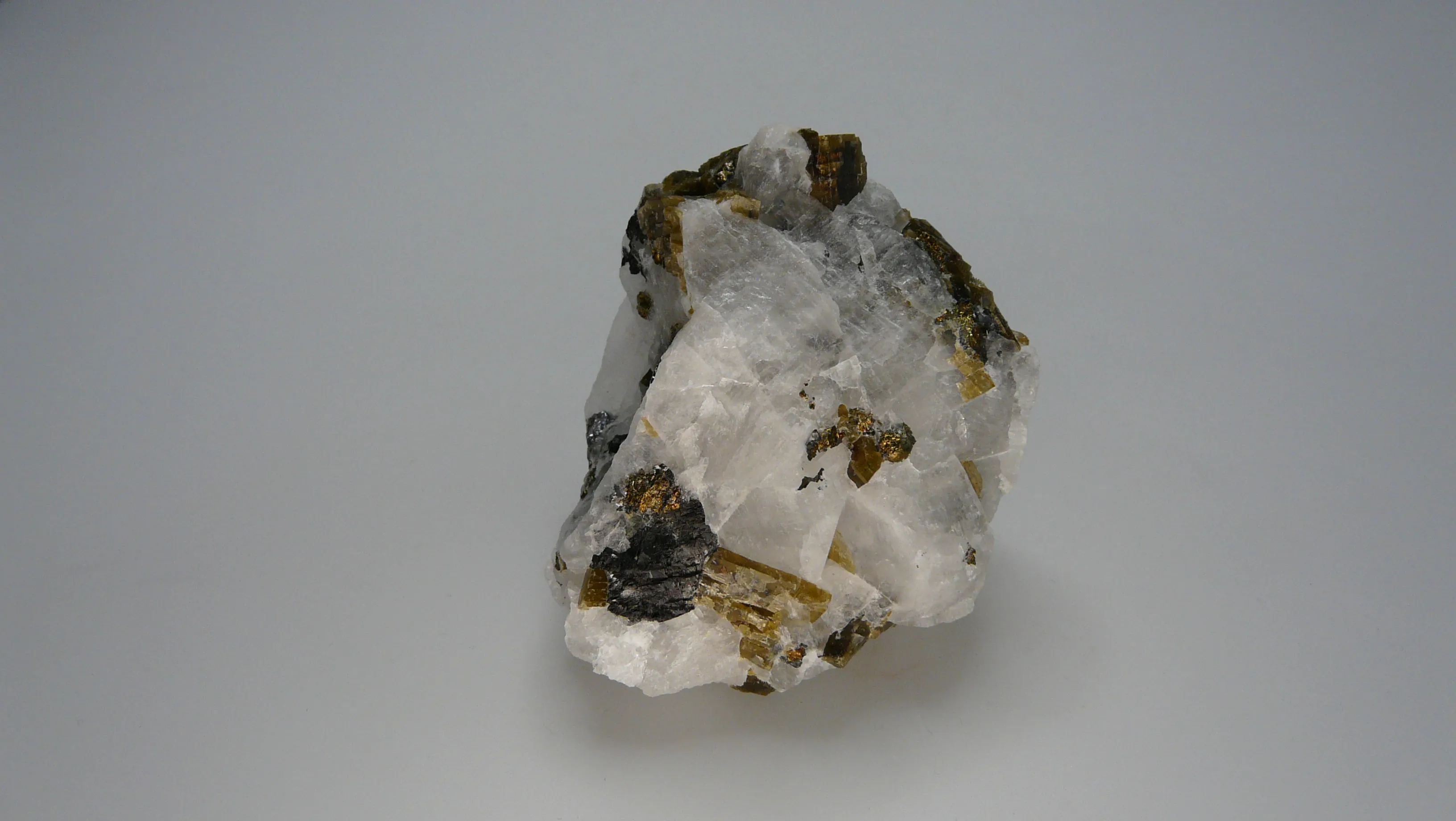
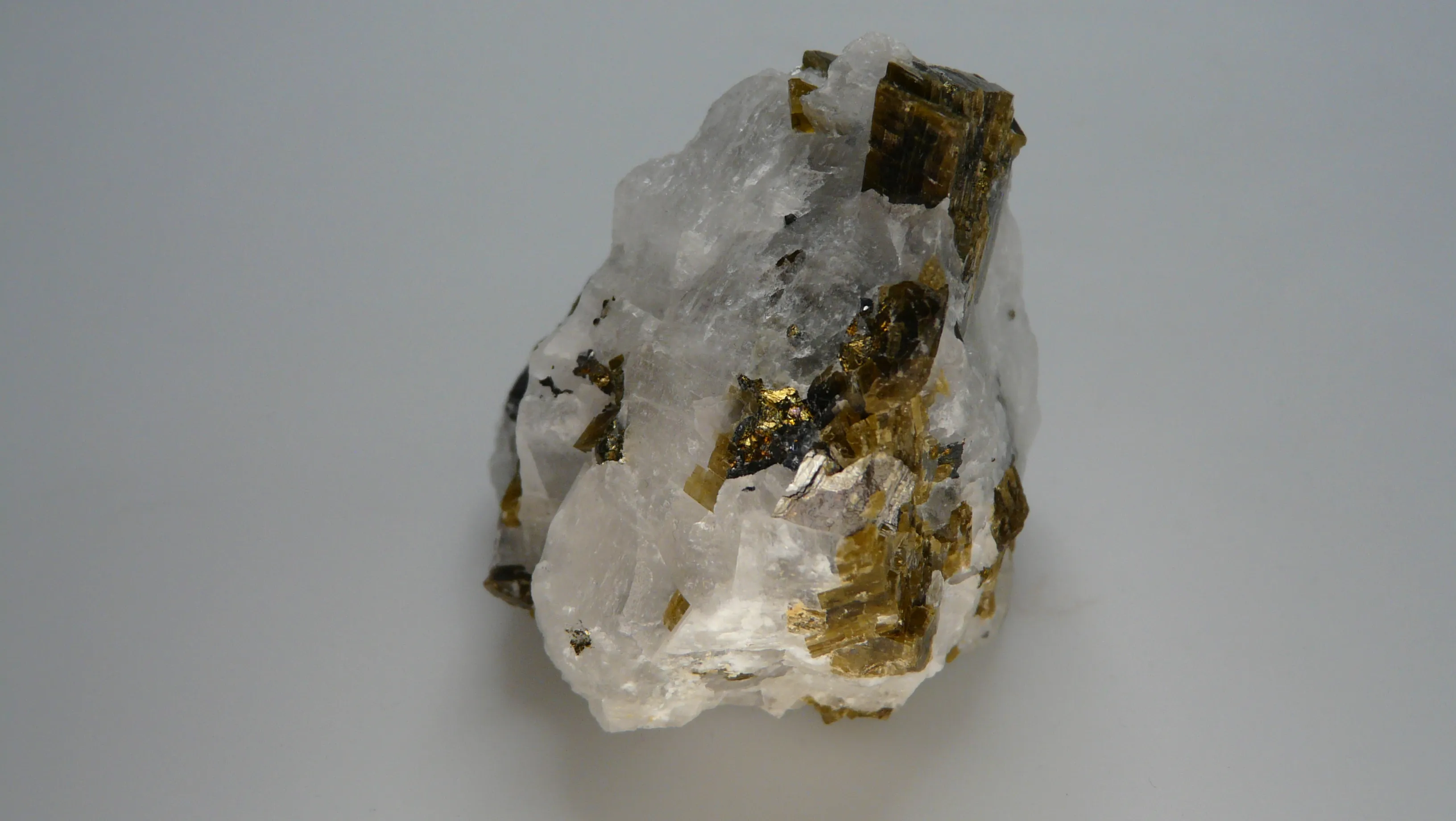
| ID | 533 | |
|---|---|---|
| Mineral |
Cryolite
Galena Siderite Chalcopyrite |
|
| Location | Ivigtut Mine - Ivittuut town - Sermersooq - Greenland | |
| Fluorescence | LW-UV: close SW-UV: close |
|
| Mindat.org |
View Cryolite information at mindat.org View Galena information at mindat.org View Siderite information at mindat.org View Chalcopyrite information at mindat.org |
|
Mindat data
| ID | 1161 |
|---|---|
| Long ID | 1:1:1161:3 |
| Formula |
Na2NaAlF6
|
| IMA Status |
0 1 |
| General Appearance | Massive white transparent to translucent. |
| Occurrence | As a pegmatitic body in a granite stock intruded into gneiss. |
| Other Occurrences | Late stage mineral in granitic pegmatites, vapor phase mineral in rhyolites. |
| Industrial | Synthetically produced material is an important electrolyte for the production of aluminium from bauxite (Bayer and Hall–Héroult processes). |
| Discovery Year | 1799 |
| Diapheny | Transparent,Translucent |
| Tenacity | brittle |
| Colour | Colourless, white, brown, grey, black; colourless in transmitted light. |
| Hardness (min) | 3.0 |
| Hardness (max) | 3.5 |
| Lustre | Vitreous, Greasy |
| About the name | From the Greek κρύος, frost, and λίθος, stone, meaning "ice-stone" in allusion to its appearance. |
| Streak | White |
| Crystal System | Monoclinic |
| Cleavage Type | None Observed |
| Fracture type | Irregular/Uneven |
| Morphology |
|
| Twinning |
Very common. Often repeated or polysynthetic with simultaneous occurrence of several twin laws, and reflecting the pseudo-orthorhombic symmetry of the unit cell.
1. By a 90° or 270° rotation on [110], penetration, common.
2. By a 180° rotation on [110], rhombic section |
| Thermal Behaviour | Melting Point: 1020°. Inverts to an isometric form at about 560°. Weakly thermoluminescent. |
| Comment Luster | Pearly on {001} |
| Publication Year | 1799 |
| shortcode_ima | Crl |
| Group | Cryolite Subgroup |
| ID | 1641 |
|---|---|
| Long ID | 1:1:1641:0 |
| Formula |
PbS
|
| IMA Status |
0 1 |
| Industrial | Principal ore of lead. Often contains silver and is a frequent ore of that metal as well. |
| Diapheny | Opaque |
| Cleavage | {001} |
| Tenacity | brittle |
| Colour | Lead-grey |
| Hardness (min) | 2.5 |
| Hardness (max) | 2.5 |
| Luminescence | None |
| Lustre | Metallic |
| About the name | Named by Pliny the Elder in 77-79 from the Greek "galene" meaning "lead ore". |
| Streak | Lead-grey |
| Crystal System | Isometric |
| Cleavage Type | Perfect |
| Fracture type | Sub-Conchoidal |
| Morphology | Cubes, octahedrons, cube-octahedron combinations and rarely dodecahedrons. Rarely, platy twins. |
| Twinning | Spinel-type {111}, lamellar {114} |
| UV | Not fluorescent in UV. |
| Thermal Behaviour | In an open tube, gives sulfurous fumes. |
| key_elements |
0 |
| shortcode_ima | Gn |
| Group | Galena Group |
| ID | 3647 |
|---|---|
| Long ID | 1:1:3647:0 |
| Formula |
Fe(CO3)
|
| IMA Status |
0 1 |
| Other Occurrences | Most often found in bedded sedimentary deposits with a biological component, with shales, clays and coal beds - suggesting that the siderite is biogenically created under low-oxygen and low-Ph conditions. It is also found in metamorphosed sedimentary rocks as more massively crystalline material, as a primary gangue mineral in hydrothermal deposits, and in pegmatites, including nepheline syenite pegmatites; as bog deposits. |
| Industrial | An ore of iron when found in sufficient volumes to be economically recoverable. |
| Diapheny | Translucent |
| Cleavage |
Perfect on |
| Tenacity | brittle |
| Colour | Yellowish-brown to greyish-brown, pale yellow to tannish, grey, brown, green, red, black and, rarely, colourless; tarnished iridescent at times; colourless to yellow and yellow-brown in transmitted light. |
| Hardness (min) | 3.5 |
| Hardness (max) | 4.5 |
| Lustre | Vitreous |
| About the name | Named in 1845 by Wilhelm Karl von Haidinger from the Greek "σίδηρος" (sideros), "iron", in allusion to its composition. |
| Streak | White |
| Crystal System | Trigonal |
| Cleavage Type | Perfect |
| Fracture type | Irregular/Uneven,Conchoidal |
| Morphology |
Crystals usually rhombohedral |
| Twinning |
On |
| shortcode_ima | Sd |
| Group | Calcite Group |
| ID | 955 |
|---|---|
| Long ID | 1:1:955:7 |
| Formula |
CuFeS2
|
| IMA Status |
0 1 |
| Other Occurrences | It is the most abundant copper-bearing mineral and is widespread. It is a primary mineral in hydrothermal veins, disseminations, and massive replacements; the principal copper mineral of porphyry copper deposits. |
| Industrial | It is the principal ore of copper. |
| Discovery Year | 1725 |
| Diapheny | Opaque |
| Cleavage | Indistinct on {011}, sometimes distinct. |
| Tenacity | brittle |
| Colour | Brass yellow, often with an iridescent tarnish. |
| Hardness (min) | 3.5 |
| Hardness (max) | 4.0 |
| Luminescence | None |
| Lustre | Metallic |
| About the name | Named in 1725 by Johann Friedrich Henckel from the Greek "chalkos", copper, and "pyrites", strike fire. |
| Streak | Greenish black |
| Crystal System | Tetragonal |
| Cleavage Type | Poor/Indistinct |
| Fracture type | Irregular/Uneven |
| Morphology | Typically found as equant to wedge-shaped pseudo-tetrahedral dispenoidal crystals, often modified by tetragonal scalenohedral faces. Mostly found massive or in disseminated grains and major deposits of such material are known. |
| Twinning | Twinned on {112} and {012}, penetration or cyclic. |
| key_elements |
0 |
| shortcode_ima | Ccp |
| Group | Chalcopyrite Group |
Details
Price: € 5
Dimensions: Not registered
Weight: Not registered
Visibile in overview:
Notes:
Ma
| Symbol | Element | |
|---|---|---|
| Al | Aluminium | |
| C | Carbon | |
| Cu | Copper | |
| F | Fluorine |

|
| Fe | Iron | |
| Na | Sodium | |
| O | Oxygen | |
| Pb | Lead |
|
| S | Sulfur |