Pyromorphite and Limonite
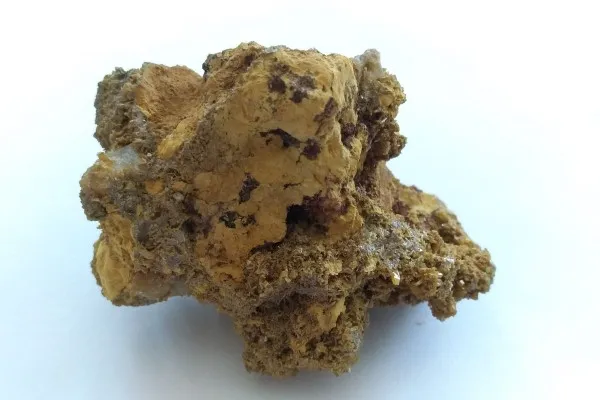
| ID | 87 | |
|---|---|---|
| Mineral |
Pyromorphite
Limonite |
|
| Location | Wheatley Mines - Phoenixville - Schuylkill - United States of America | |
| Fluorescence | LW-UV: close SW-UV: close |
|
| Mindat.org |
View Pyromorphite information at mindat.org View Limonite information at mindat.org |
|
Mindat data
| ID | 3318 |
|---|---|
| Long ID | 1:1:3318:9 |
| Formula |
MnO2
|
| IMA Status |
0 1 |
| Other Occurrences | A common Mn mineral, although difficult to distinguish from similar Mn minerals, pyrolusite forms under oxidizing conditions and high pH. Mainly a mineral of lacustrine, shallow marine, and bog deposits, it is also found in the oxidized zones of manganiferous ore deposits and as deposits formed by circulating meteoric water. Both colloidal processes and bacterial action are important in its formation. |
| Diapheny | Opaque |
| Cleavage | Perfect on {110}. |
| Tenacity | brittle |
| Colour | Black or very dark grey. |
| Hardness (min) | 2.0 |
| Hardness (max) | 6.5 |
| About the name | Named in 1827 from the Greek for "fire" and "to wash," because it was used to remove brown and green tints in the making of glass. |
| Streak | Black to bluish-black. |
| Crystal System | Tetragonal |
| Cleavage Type | Perfect |
| Fracture type | Irregular/Uneven |
| Morphology | Crystals are uncommon, either long or short prismatic parallel to [001] or equant; more typically found as earthy powder or fibrous aggregates as crusts on rocks; sometimes as botryoidal aggregates, more rarely as druses of microscopic crystals. Never found as dendrites despite old literature. [The obsolete term "polianite" was once used to refer to crystalline pyrolusite, which was assumed to be a different species than earthy to crusty pyrolusite.] |
| Twinning | Twinning rare. Repeated twins with twin planes {031} and {032}. Polysynthetic twinning observed in polished sections. |
| UV | None. |
| shortcode_ima | Pyl |
| Group | Rutile Group |
| ID | 2402 |
|---|---|
| Long ID | 1:1:2402:6 |
| Description | Currently used as a field-term for unidentified massive hydroxides and oxides of iron, with no visible crystals, and a yellow-brown streak. 'Limonite' is most commonly the mineral species goethite, but can also consist of varying proportions of lepidoc... |
| Diapheny | Opaque |
| About the name | Named in 1813 by Johann Friedrich Ludwig Hausmann from the Greek λειμών for meadow alluding to its common occurrences in bogs. |
Details
Price: € 15
Dimensions: Not registered
Weight: Not registered
Visibile in overview:
Notes:
| Symbol | Element | |
|---|---|---|
| Mn | Manganese | |
| O | Oxygen |