Calcite, Pyrite and Sphalerite
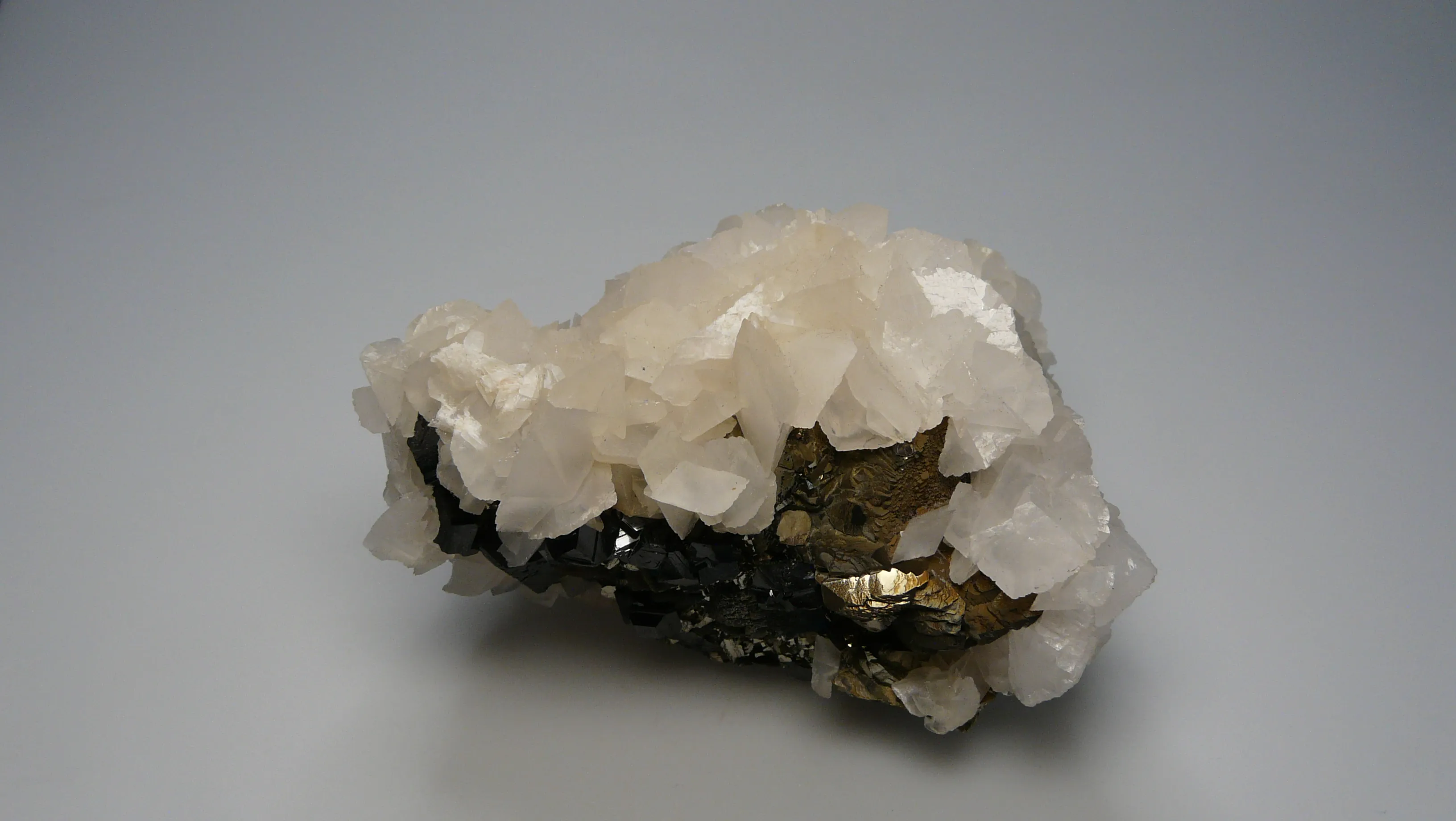
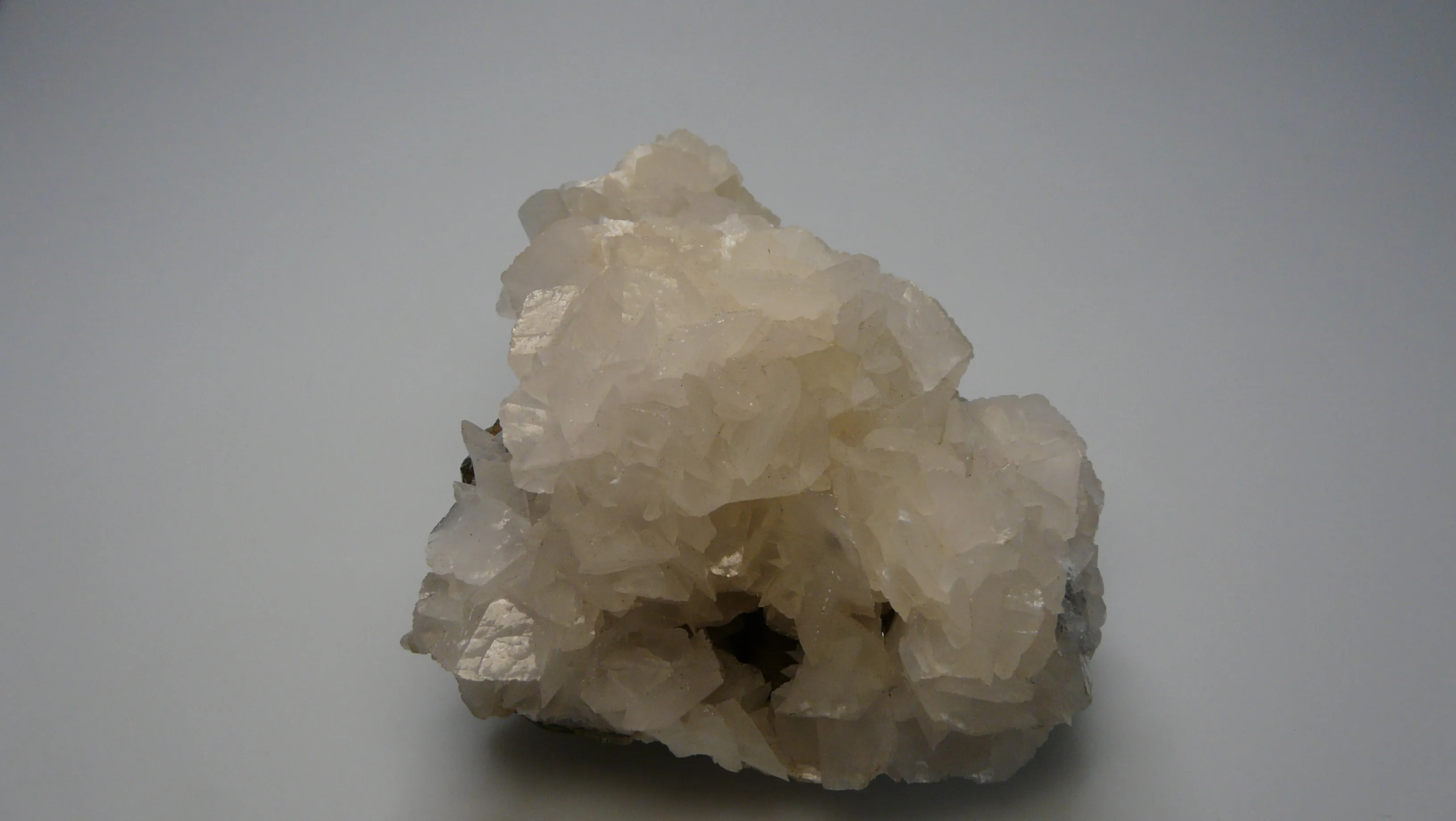
| ID | 7 | |
|---|---|---|
| Mineral |
Calcite
Pyrite Sphalerite |
|
| Location | Trepča complex - Trepca - Trepca - Kosovo | |
| Fluorescence | LW-UV: check SW-UV: check |
|
| Mindat.org |
View Calcite information at mindat.org View Pyrite information at mindat.org View Sphalerite information at mindat.org |
|
Mindat data
| ID | 859 |
|---|---|
| Long ID | 1:1:859:4 |
| Formula |
Ca(CO3)
|
| IMA Status |
0 1 |
| Other Occurrences | Found in most geologic settings and as a later forming replacement mineral in most other environments in one form or another, it is most common as massive material in limestones and marbles. It forms as chemical sedimentary deposits as limestone, can be regionally or contact metamorphosed into marbles and rarely forms igneous rocks (carbonatites). Also is a common gangue mineral in hydrothermal deposits. |
| Industrial | Mined extensively for a wide variety of uses ranging from lime (cement) to limestone and marble building stones and aggregates, agricultural supplements and optical calcite. |
| Diapheny | Transparent,Translucent |
| Cleavage |
Perfect on |
| Tenacity | brittle |
| Colour | White, Yellow, Red, Orange, Blue, Green, Brown, Gray etc. |
| Hardness (min) | 3.0 |
| Hardness (max) | 3.0 |
| Luminescence | Fluorescent |
| Lustre | Vitreous |
| About the name | Ancient name. Named as a mineral by Gaius Plinius Secundus (Pliny the elder) in 79 from Calx, Latin for Lime. |
| Streak | White |
| Crystal System | Trigonal |
| Cleavage Type | Perfect |
| Fracture type | Conchoidal |
| Morphology | Over 800 different forms have been described. Most commonly as acute rhombohedrons or prismatic with scalenohedral terminations, or combinations of the two. |
| Twinning |
At least four twin laws have been described, the most common being when the twin plane and the composition plane are |
| UV | May be fluorescent under LW UV, mid-range UV or SW UV as well as under X-rays, cathode rays and even sunlight, in a number of colors and shades, commonly an intense red under SW with Mn as an activator (such as at Franklin, New Jersey, USA, and Långban in Sweden. |
| Comment Luster | Pearly on cleavage and {0001}. Can be dull or earthy in chalk variety. |
| shortcode_ima | Cal |
| Group | Calcite Group |
| ID | 3314 |
|---|---|
| Long ID | 1:1:3314:1 |
| Formula |
FeS2
|
| IMA Status |
0 1 |
| Other Occurrences | Common in many rock types, igneous, metamorphic and sedimentary. |
| Diapheny | Opaque |
| Cleavage | Indistinct on {001}. |
| Tenacity | brittle |
| Colour | Pale brass-yellow |
| Hardness (min) | 6.0 |
| Hardness (max) | 6.5 |
| About the name | Named in antiquity from the Greek "pyr" for "fire", because sparks flew from it when struck with another mineral or metal. Known to Dioscorides (~50 CE) under the name "περι υληζ ιατρικηζ" which included both pyrite and chalcopyrite. |
| Streak | Greenish-black |
| Crystal System | Isometric |
| Cleavage Type | Poor/Indistinct |
| Fracture type | Irregular/Uneven,Conchoidal |
| Morphology | Typically cubic or pyritohedral (pentagonal dodecahedral), sometimes octahedral and combinations are common, resulting in striated faces. Less frequently octahedral, most commonly massive, granular, and sometimes radiating, reniform, discoidal or globular. |
| Twinning | On [110], interpenetrating ('Iron Cross Law'). Twin axis [001] and twin plane {011}, penetration and contact twins. Twinning on (111) was described by Nicol (1904), Goldschmidt and Nicol (1904) and Gaubert (1928), all of whom considered it rare. |
| UV | Not fluorescent in UV |
| Thermal Behaviour | Heated in a closed tube gives a sublimate of sulfur and a magnetic residue. |
| shortcode_ima | Py |
| Group | Pyrite Group |
| ID | 3727 |
|---|---|
| Long ID | 1:1:3727:9 |
| Formula |
ZnS
|
| IMA Status |
0 1 |
| Discovery Year | 1847 |
| Diapheny | Transparent,Translucent |
| Cleavage | Perfect {011} |
| Tenacity | brittle |
| Colour | Yellow, light to dark brown, black, red-brown, colourless, light blue. green |
| Hardness (min) | 3.5 |
| Hardness (max) | 4.0 |
| Luminescence | Fluorescent and triboluminescent |
| Lustre | Resinous |
| About the name | Originally called blende in 1546 by Georgius Agricola (Georg Bauer). Known by a variety of chemical-based names subsequent to Agricola and before Glocker, including "zincum". Named Sphalerite in 1847 by Ernst Friedrich Glocker from the Greek σφαλεροζ "sphaleros" = treacherous, in allusion to the ease with which dark varieties were mistaken for galena, but yielded no lead. |
| Streak | Pale yellow to brown. |
| Crystal System | Isometric |
| Cleavage Type | Perfect |
| Fracture type | Conchoidal |
| Twinning | {111} |
| UV | Light colored sphalerite may fluoresce in blue or orange in LW. Fluoresces less strongly, sometimes not at all, in SW or MW. |
| key_elements |
0 |
| shortcode_ima | Sp |
| Group | Sphalerite Group |
Details
Price: € 15
Dimensions: Not registered
Weight: Not registered
Visibile in overview:
Notes:
| Symbol | Element | |
|---|---|---|
| C | Carbon | |
| Ca | Calcium | |
| Fe | Iron | |
| O | Oxygen | |
| S | Sulfur | |
| Zn | Zinc |