Amber
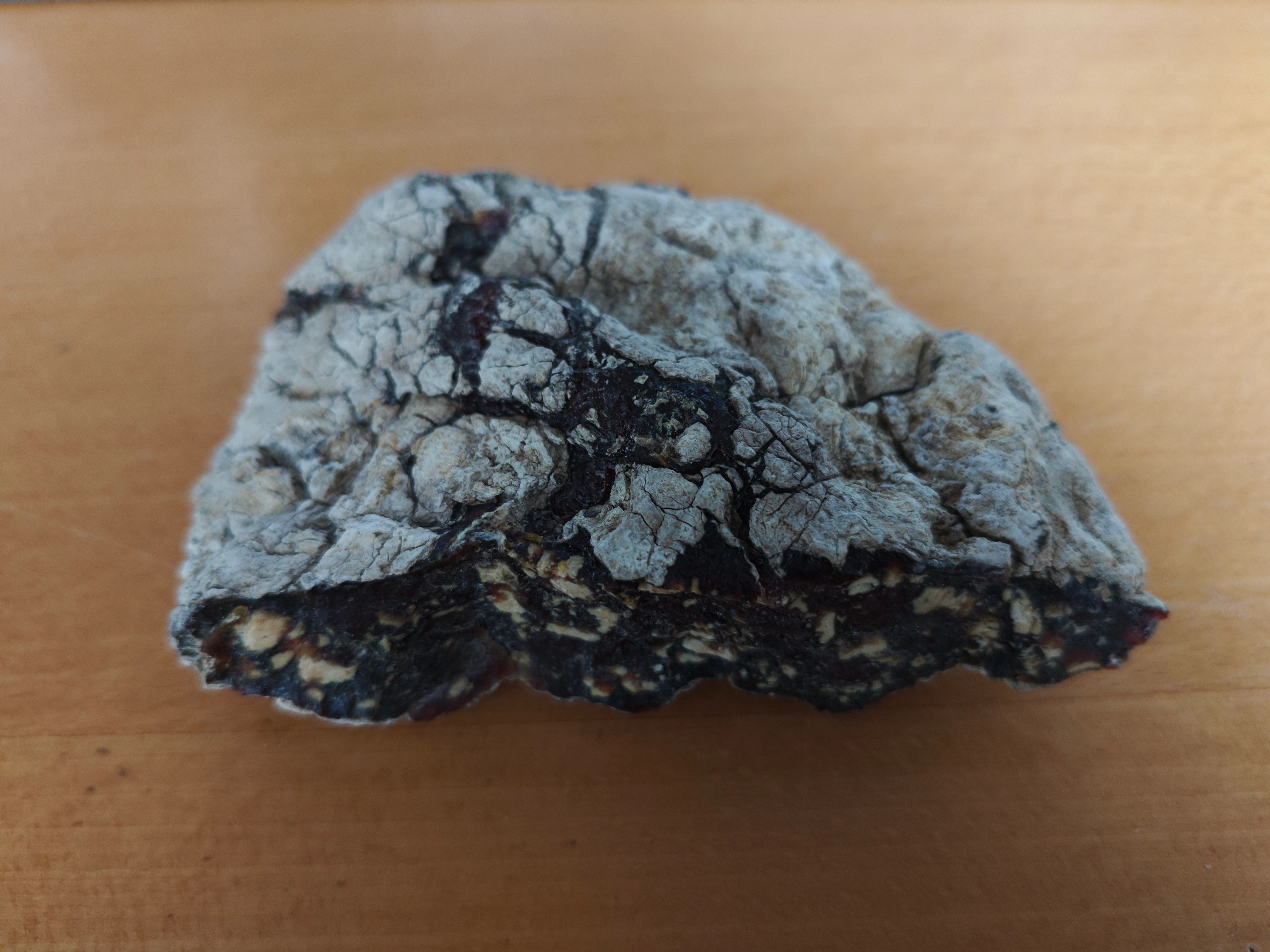
| ID | 601 | |
|---|---|---|
| Mineral | Amber | |
| Location | Cap d'Ambre - Antsiranana II District - Madagascar | |
| Fluorescence | LW-UV: close SW-UV: close |
|
| Mindat.org |
View Amber information at mindat.org |
|
Mindat data
| ID | 188 |
|---|---|
| Long ID | 1:1:188:3 |
| Entry type | 3 |
| Colour | Yellow-orange-brown, pale lemon yellow, red, brown, nearly black; rarely blue or green |
| Hardness (min) | 2.0 |
| Hardness (max) | 2.5 |
| About the name | From https://en.wikipedia.org/wiki/Amber#Etymology: The English word amber derives from Arabic ʿanbar عنبر (ultimately from Middle Persian ambar) via Middle Latin ambar and Middle French ambre. The word referred to what is now known as ambergris (ambre gris or "gray amber"), a solid waxy substance derived from the sperm whale. The word, in its sense of "ambergris," was adopted in Middle English in the 14th century. In the Romance languages, the sense of the word was extended to Baltic amber (fossil resin) from as early as the late 13th century. At first called white or yellow amber (ambre jaune), this meaning was adopted in English by the early 15th century. As the use of ambergris waned, this became the main sense of the word. The two substances ("yellow amber" and "gray amber") conceivably became associated or confused because they both were found washed up on beaches. Ambergris is less dense than water and floats, whereas amber is too dense to float, though less dense than stone. The classical names for amber, Latin electrum and Ancient Greek ἤλεκτρον (ēlektron), are connected to a term ἠλέκτωρ (ēlektōr) meaning "beaming Sun". According to myth, when Phaëton son of Helios (the Sun) was killed, his mourning sisters became poplar trees, and their tears became elektron, amber. The word elektron gave rise to the words electric, electricity, and their relatives because of amber's ability to bear a charge of static electricity. Pliny the Elder says that the German name of amber was glæsum, "for which reason the Romans, when Germanicus commanded the fleet in those parts, gave to one of these islands the name of Glæsaria, which by the barbarians was known as Austeravia". This is confirmed by the recorded Old High German word glas and by the Old English word glær for "amber" (compare glass). In Middle Low German, amber was known as berne-, barn-, börnstēn (with etymological roots related to "burn" and to "stone"). The Low German term became dominant also in High German by the 18th century, thus modern German Bernstein besides Dutch barnsteen. In the Baltic languages, the Lithuanian term for amber is gintaras and the Latvian dzintars. These words, and the Slavic jantar and Hungarian gyanta ('resin'), are thought to originate from Phoenician jainitar ("sea-resin"). |
Details
Price: € 10
Dimensions: Not registered
Weight: Not registered
Visibile in overview:
Notes: