Cuprite, Copper, Limonite and Manganese
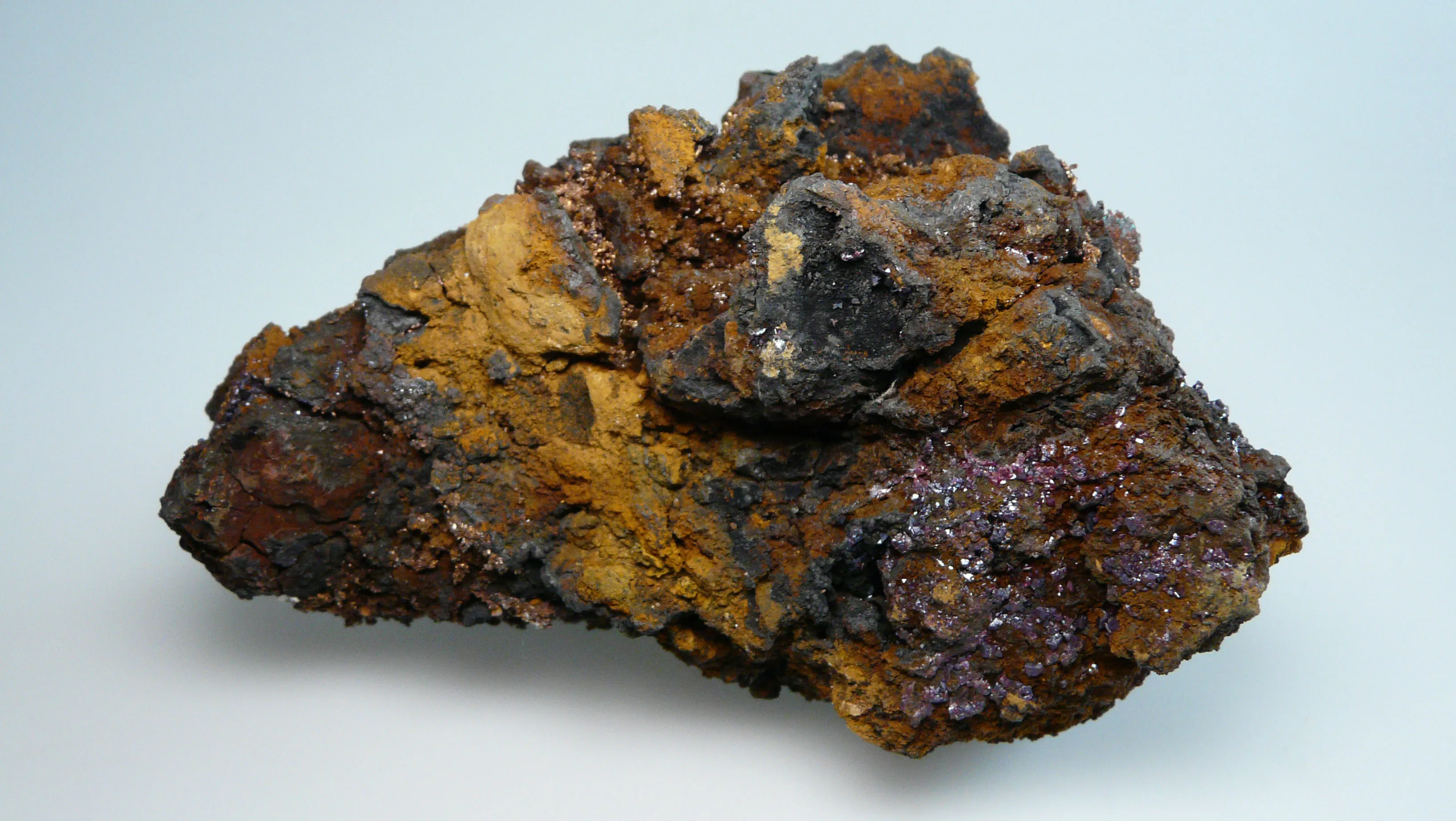
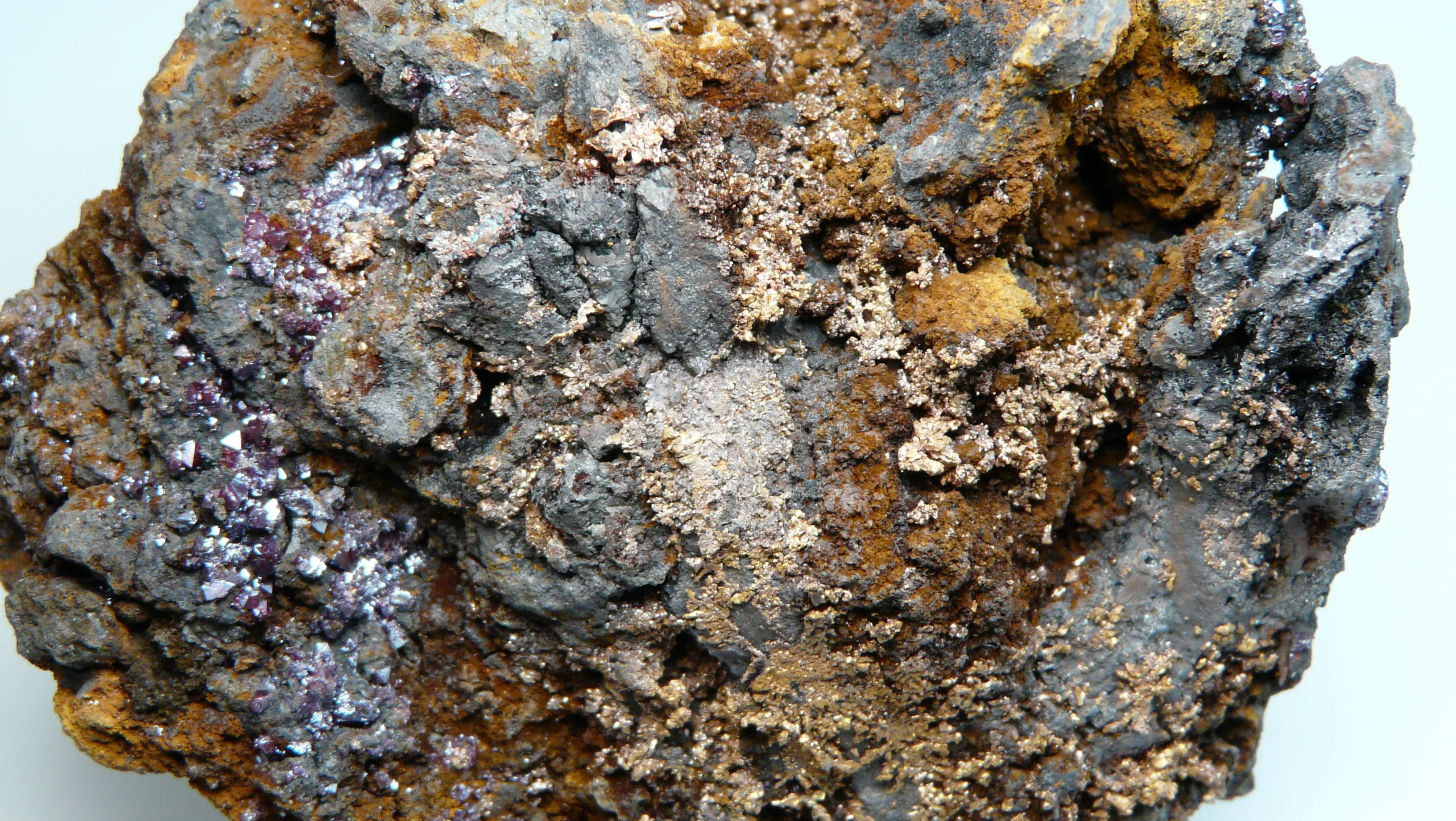
| ID | 597 | |
|---|---|---|
| Mineral |
Cuprite
Copper Limonite Manganese |
|
| Location | Jiujiang - Jiangxi - China | |
| Fluorescence | LW-UV: close SW-UV: close |
|
| Mindat.org |
View Cuprite information at mindat.org View Copper information at mindat.org View Limonite information at mindat.org View Manganese information at mindat.org |
|
Mindat data
| ID | 1172 |
|---|---|
| Long ID | 1:1:1172:9 |
| Formula |
Cu2O
|
| IMA Status |
0 1 |
| Description | Cuprite is commonly found as an oxidation product of copper sulphides in the upper zones of veins, often associated with Native Copper, Malachite, Azurite, Limonite and Chalcocite. A fibrous form of Cuprite is known as Chalcotrichite. |
| Other Occurrences | Found in the oxidised zones of copper deposits. |
| Discovery Year | 1845 |
| Diapheny | Transparent,Translucent |
| Cleavage | Interrupted on {111}, more rarely on {001}. |
| Tenacity | brittle |
| Colour | Dark red to cochineal red, sometimes almost black. |
| Hardness (min) | 3.5 |
| Hardness (max) | 4.0 |
| Lustre | Adamantine to sub-metallic |
| About the name | Named in 1845 by Wilhelm Karl von Haidinger from the Latin "cuprum," in allusion to its composition. Haidinger renamed a previously known mineral that had been known by a wide variety of names. |
| Streak | Shining metallic brownish-red. |
| Crystal System | Isometric |
| Cleavage Type | Imperfect/Fair |
| Fracture type | Conchoidal |
| Morphology |
Crystals octahedral or cubic, rarely dodecahedral, sometimes highly modified. In the variety |
| Twinning | Penetration twins common. |
| key_elements |
0 |
| shortcode_ima | Cpr |
| ID | 1209 |
|---|---|
| Long ID | 1:1:1209:2 |
| Formula |
Cu
|
| IMA Status |
0 1 |
| Description | Copper Group. Copper was one of the first metals to be worked into implements and the first metal to be smelted from ores. Its excellent ductility and high conductivity assure its use in modern society. |
| Other Occurrences | In the oxidation zone above sulfide copper deposits, basalts, and sedimentary rocks (Red Bed deposits), rarely in meteorites. |
| Industrial | Electrical wire, cooking utensils, in alloys such as brass and bronze. |
| Diapheny | Opaque |
| Cleavage | None |
| Tenacity | malleable |
| Colour | Copper-red. Tarnishes to black or green in air. |
| Hardness (min) | 2.5 |
| Hardness (max) | 3.0 |
| Luminescence | None |
| Lustre | Metallic |
| About the name | From Greek "kyprios", of Cyprus, the location of ancient copper mines; Latin "cuprum". |
| Streak | Copper-red |
| Crystal System | Isometric |
| Cleavage Type | None Observed |
| Fracture type | Hackly |
| Morphology | Cubes, dodecahedra, and as tetrahexahedra; rarely as octahedra and complex combinations. Filiform, herringbone, arborescent, wires and massive. |
| Twinning | Spinel twins {111} |
| key_elements |
0 |
| shortcode_ima | Cu |
| Group | Copper Group |
| ID | 2402 |
|---|---|
| Long ID | 1:1:2402:6 |
| Entry type | 3 |
| Diapheny | Opaque |
| About the name | Named in 1813 by Johann Friedrich Ludwig Hausmann from the Greek λειμών for meadow alluding to its common occurrences in bogs. |
| ID | 11478 |
|---|---|
| Long ID | 1:1:11478:9 |
| General Appearance | Angular grains up to 0.8mm, in matrix of tephroite, spessartine, chromian hausmannite, unnamed Mn carbide. |
| Occurrence | PGM-Au placers derived from serpentinized ultrabasic rocks (olivine-orthoclase picrite) in the central Aldan Shield ultrabasic alkali complex, eastern Siberia. |
| Diapheny | Opaque |
| Colour | steel-grey |
| Hardness (min) | 6.5 |
| Hardness (max) | 6.5 |
| About the name | The native element, described in 2001 without I.M.A. approval. |
| Streak | dark gey |
| Crystal System | Isometric |
| Cleavage Type | None Observed |
| Morphology | angular grains |
Details
Price: € 225
Dimensions: Not registered
Weight: Not registered
Visibile in overview:
Notes:
| Symbol | Element | |
|---|---|---|
| Cu | Copper | |
| Mn | Manganese | |
| O | Oxygen |