Calcite and Goethite
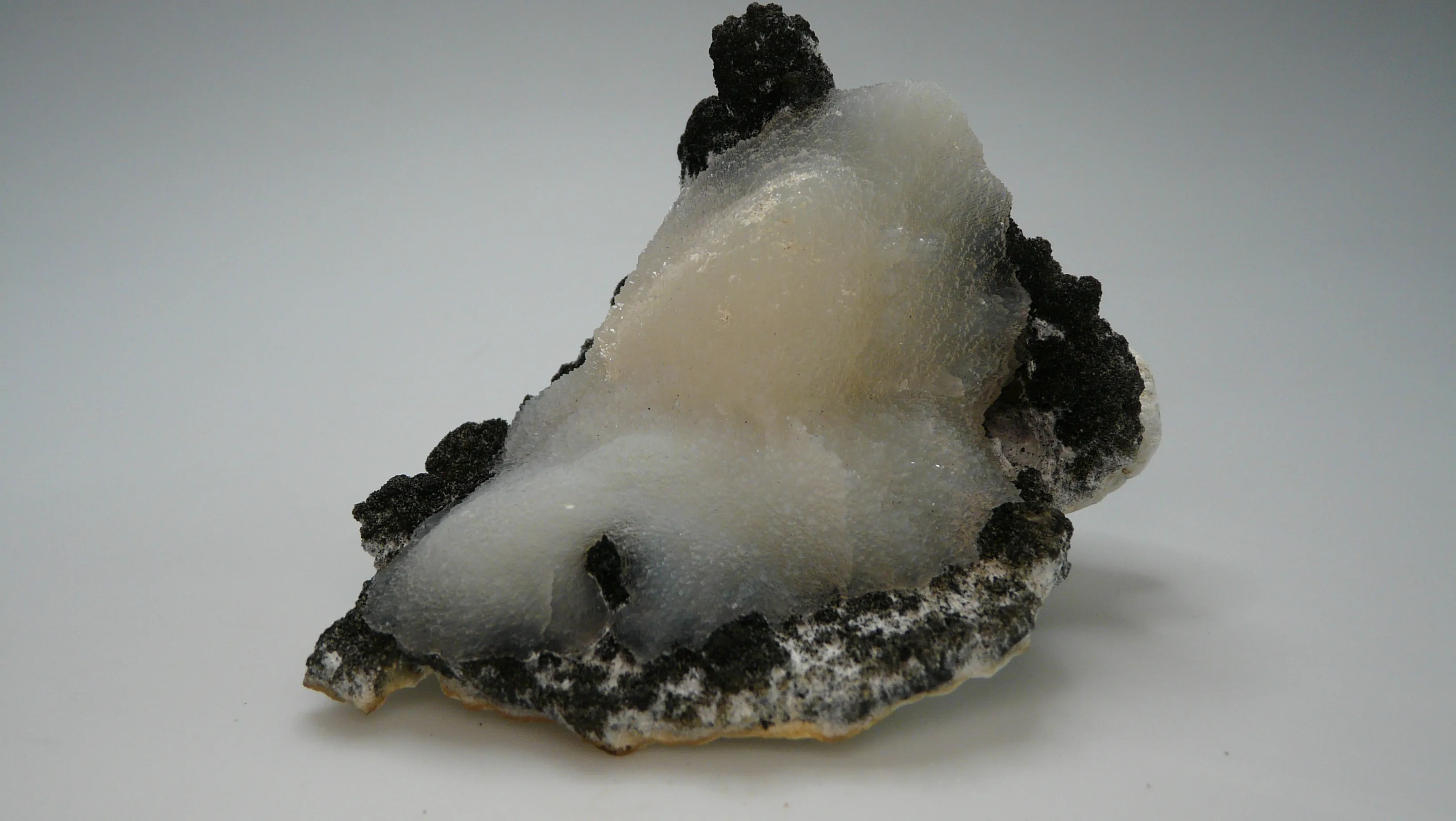
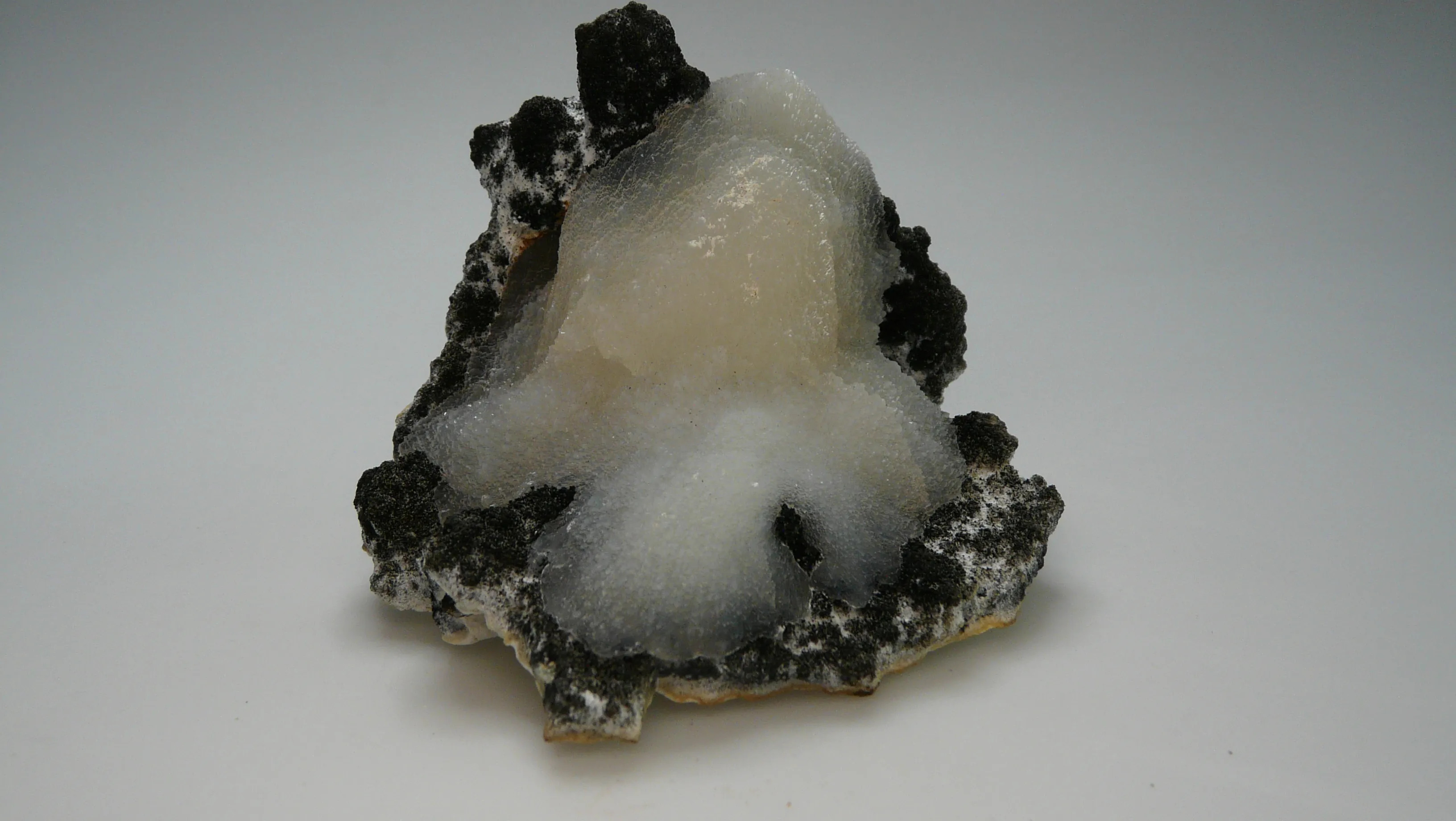
| ID | 549 | |
|---|---|---|
| Mineral |
Calcite
Goethite |
|
| Location | Rio Grande do Sul - Brazil | |
| Fluorescence | LW-UV: check SW-UV: check |
|
| Mindat.org |
View Calcite information at mindat.org View Goethite information at mindat.org |
|
Mindat data
| ID | 859 |
|---|---|
| Long ID | 1:1:859:4 |
| Formula |
Ca(CO3)
|
| IMA Status |
0 1 |
| Other Occurrences | Found in most geologic settings and as a later forming replacement mineral in most other environments in one form or another, it is most common as massive material in limestones and marbles. It forms as chemical sedimentary deposits as limestone, can be regionally or contact metamorphosed into marbles and rarely forms igneous rocks (carbonatites). Also is a common gangue mineral in hydrothermal deposits. |
| Industrial | Mined extensively for a wide variety of uses ranging from lime (cement) to limestone and marble building stones and aggregates, agricultural supplements and optical calcite. |
| Diapheny | Transparent,Translucent |
| Cleavage |
Perfect on |
| Tenacity | brittle |
| Colour | White, Yellow, Red, Orange, Blue, Green, Brown, Gray etc. |
| Hardness (min) | 3.0 |
| Hardness (max) | 3.0 |
| Luminescence | Fluorescent |
| Lustre | Vitreous |
| About the name | Ancient name. Named as a mineral by Gaius Plinius Secundus (Pliny the elder) in 79 from Calx, Latin for Lime. |
| Streak | White |
| Crystal System | Trigonal |
| Cleavage Type | Perfect |
| Fracture type | Conchoidal |
| Morphology | Over 800 different forms have been described. Most commonly as acute rhombohedrons or prismatic with scalenohedral terminations, or combinations of the two. |
| Twinning |
At least four twin laws have been described, the most common being when the twin plane and the composition plane are |
| UV | May be fluorescent under LW UV, mid-range UV or SW UV as well as under X-rays, cathode rays and even sunlight, in a number of colors and shades, commonly an intense red under SW with Mn as an activator (such as at Franklin, New Jersey, USA, and Långban in Sweden. |
| Comment Luster | Pearly on cleavage and {0001}. Can be dull or earthy in chalk variety. |
| shortcode_ima | Cal |
| Group | Calcite Group |
| ID | 1719 |
|---|---|
| Long ID | 1:1:1719:6 |
| Formula |
FeO(OH)
|
| IMA Status |
0 1 |
| Other Occurrences | Common weathering product, primary hydrothermal mineral, bog and marine environments. |
| Industrial | Iron ore |
| Discovery Year | 1806 |
| Diapheny | Opaque |
| Cleavage | {010}; {100} less perfect. |
| Tenacity | brittle |
| Colour | Brownish black, yellow-brown, reddish brown |
| Hardness (min) | 5.0 |
| Hardness (max) | 5.5 |
| About the name | Named in 1806 by Johann Georg Lenz in honor of the German poet, novelist, playwrighter, philosopher, politician, and geoscientist Johann Wolfgang von Goethe [August 28, 1749, Frankfurt, Germany – March 22, 1832, Weimar, Germany]. Goethe was Chief Minister of State of Weimar. (Portions of the Goethe mineral collection are reputedly held by the Goethe Society in New York, New York, USA.) |
| Streak | Yellowish brown, orange-yellow, ocher-yellow |
| Crystal System | Orthorhombic |
| Cleavage Type | Perfect |
| Fracture type | Irregular/Uneven |
| Morphology | Prismatic [001] and striated [001]; also flattened into tablets or scales on {010}. Velvety aggregates of capillary crystals to acicular [001] and long prismatic forms often radially grouped. Massive, reniform, botryoidal, stalactitic. Bladed or columnar. Compact or fibrous concretionary nodules. Oolitic. |
| Twinning |
Apparently none reported, but see https://www.mindat.org/mesg-631125.html and compare twinning in isostructural |
| Thermal Behaviour | Heated in a closed tube, gives off water. |
| shortcode_ima | Gth |
| Group | Diaspore Group |
Details
Price: € 99
Dimensions: Not registered
Weight: Not registered
Visibile in overview:
Notes:
| Symbol | Element | |
|---|---|---|
| C | Carbon | |
| Ca | Calcium | |
| Fe | Iron | |
| H | Hydrogen | |
| O | Oxygen |