Hematite
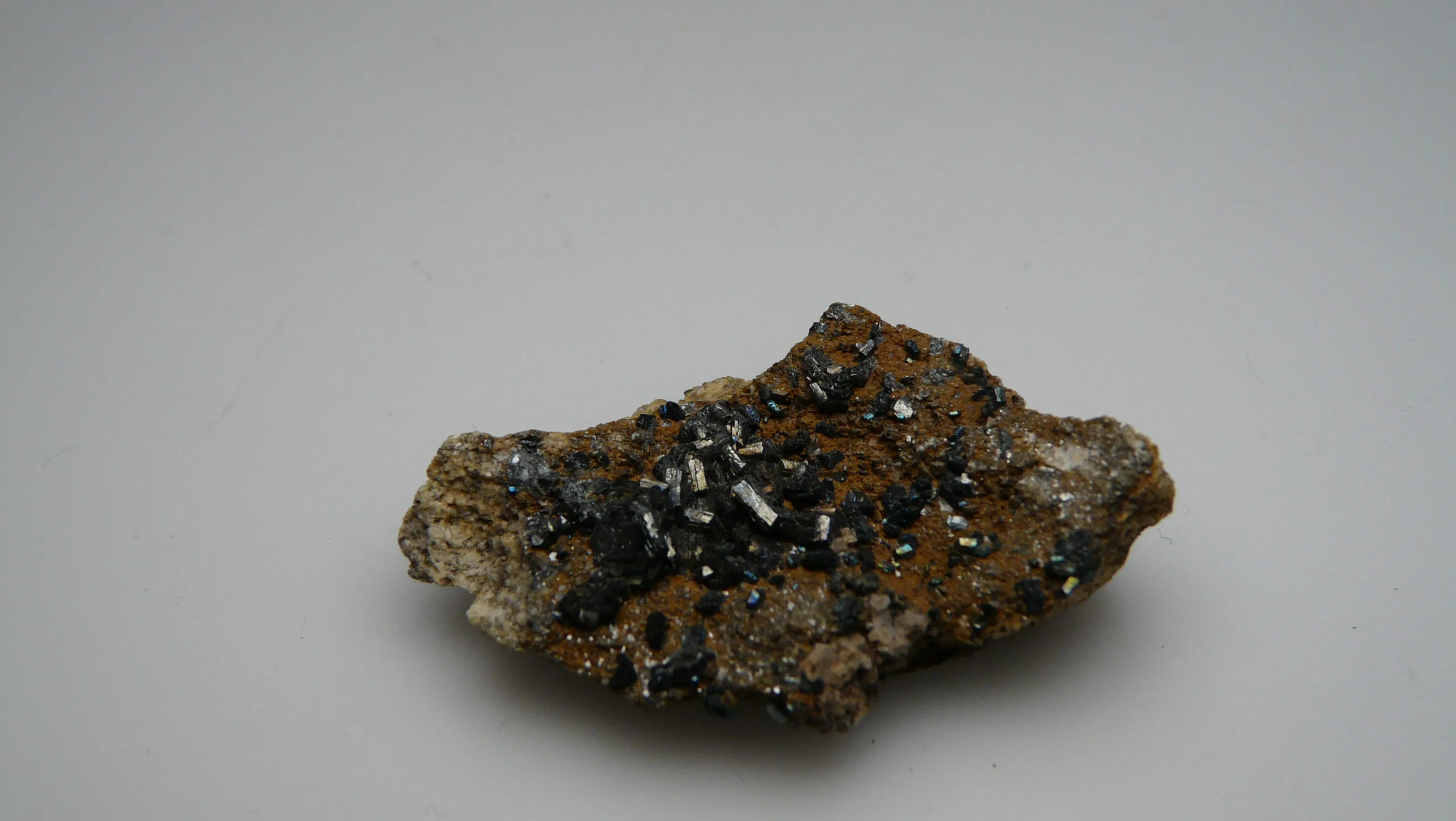
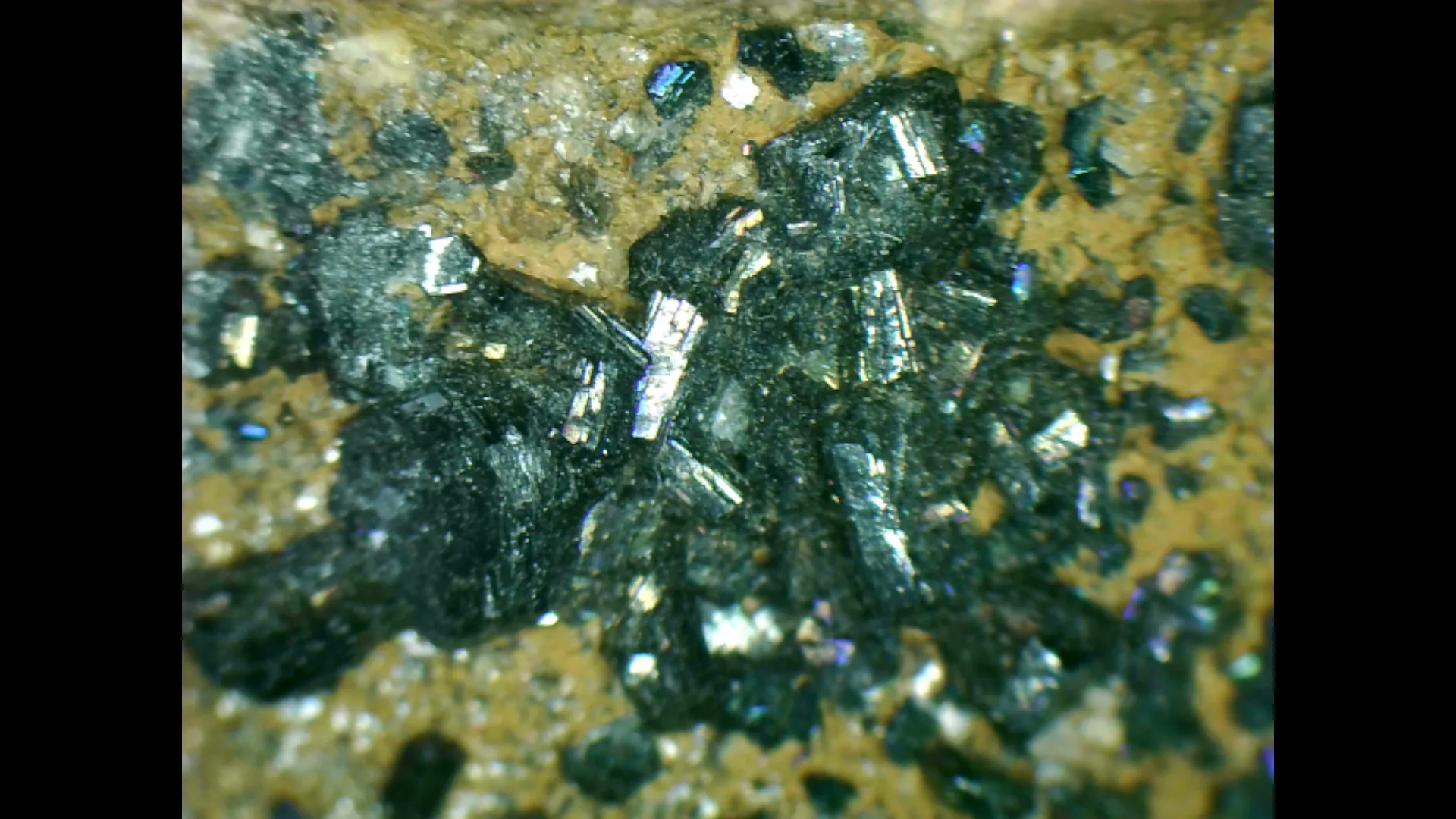
| ID | 521 | |
|---|---|---|
| Mineral | Hematite | |
| Location | Tujetsch - Grisons - Switzerland | |
| Fluorescence | LW-UV: close SW-UV: close |
|
| Mindat.org |
View Hematite information at mindat.org |
|
Mindat data
| ID | 1856 |
|---|---|
| Long ID | 1:1:1856:8 |
| Formula |
Fe2O3
|
| IMA Status |
0 1 |
| Other Occurrences | Large ore bodies of hematite are usually of sedimentary origin; also found in high-grade ore bodies in metamorphic rocks due to contact metasomatism, and occasionally as a sublimate on igneous extrusive rocks ("lavas") as a result of volcanic activity. It is also usually the cause of red soils all over the planet. |
| Industrial | A major ore of iron. |
| Diapheny | Opaque |
| Tenacity | brittle |
| Colour | Steel-grey to black in crystals and massively crystalline ores, dull to bright "rust-red" in earthy, compact, fine-grained material. |
| Hardness (min) | 5.0 |
| Hardness (max) | 6.0 |
| Luminescence | None |
| Lustre | Metallic |
| About the name | Originally named about 300-325 BCE by Theophrastus from the Greek, "αιματίτις λίθος" ("aematitis lithos") for "blood stone". It is possibly the first mineral ever named ending with a "-ite" suffix. Translated in 79 by Pliny the Elder to haematites, "bloodlike", in allusion to the vivid red colour of the powder. The modern form evolved by authors frequently simplifying the spelling by excluding the "a", somewhat in parallel with other words originally utilising the root "haeme". |
| Streak | Reddish brown ("rust-red") |
| Crystal System | Trigonal |
| Cleavage Type | None Observed |
| Fracture type | Irregular/Uneven,Sub-Conchoidal |
| Morphology |
|
| Twinning |
|
| UV | None. |
| shortcode_ima | Hem |
| Group | Hematite Group |
Details
Price: € 2
Dimensions: Not registered
Weight: Not registered
Visibile in overview:
Notes:
| Symbol | Element | |
|---|---|---|
| Fe | Iron | |
| O | Oxygen |