Anatase and Euclase
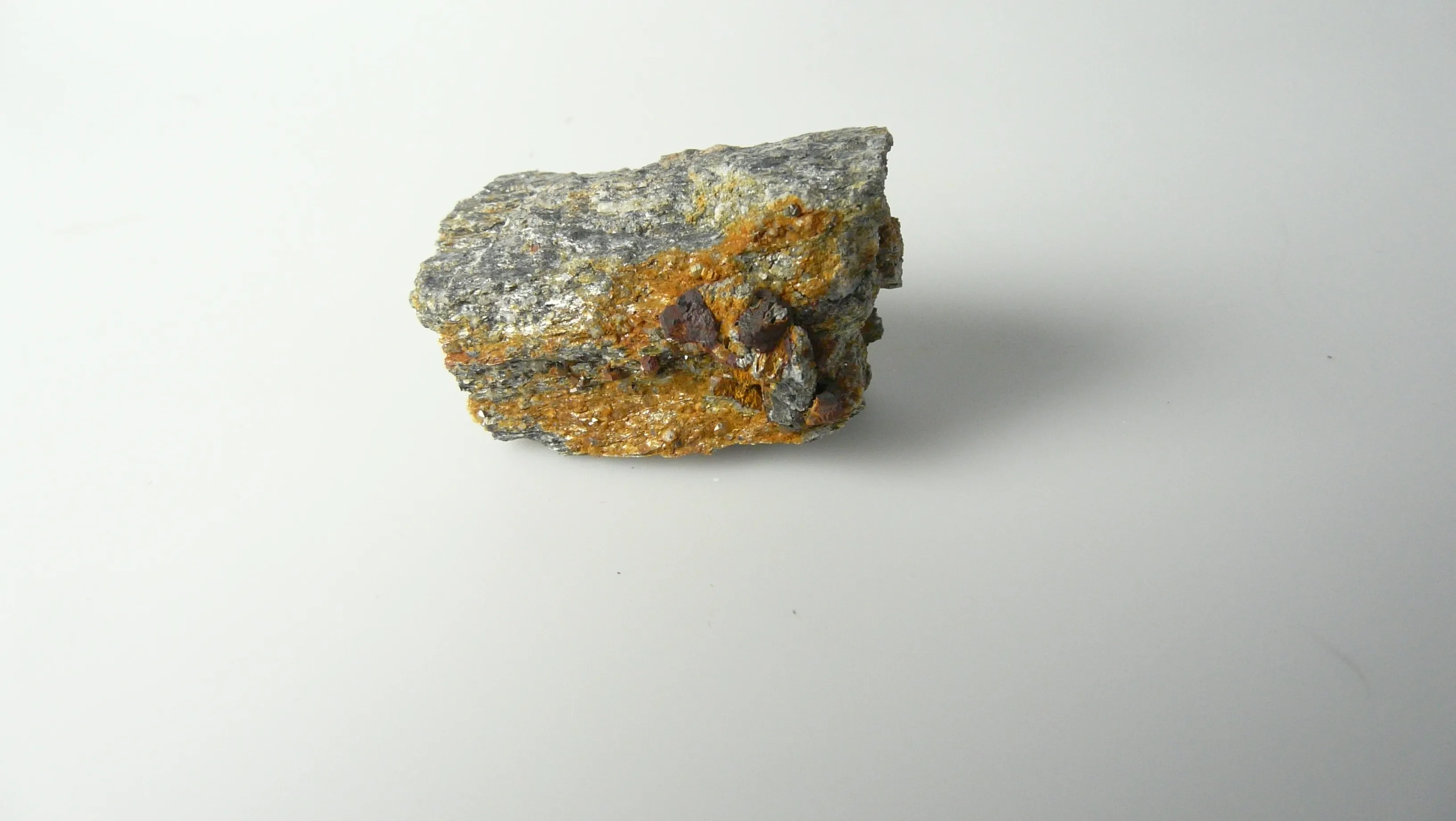
| ID | 437 | |
|---|---|---|
| Mineral |
Anatase
Euclase |
|
| Location | Grieswies - Rauris - Salzburg - Austria | |
| Fluorescence | LW-UV: close SW-UV: close |
|
| Mindat.org |
View Anatase information at mindat.org View Euclase information at mindat.org |
|
Mindat data
| ID | 213 |
|---|---|
| Long ID | 1:1:213:8 |
| Formula |
TiO2
|
| IMA Status |
0 1 |
| Occurrence | Alpine veins, derived from the enclosing gneisses or schists by hydrothermal solutions. |
| Other Occurrences | Usually secondary, derived from other titanium-bearing minerals. In alpine veins, derived from the enclosing gneisses or schists by hydrothermal solutions. In igneous and metamorphic rocks; in pegmatites; from a carbonatite. A common detrital mineral. |
| Discovery Year | 1801 |
| Diapheny | Transparent,Translucent |
| Cleavage | on {001} and {011} |
| Tenacity | brittle |
| Colour | Brown, pale yellow or reddish brown, indigo, black; pale green, pale lilac, grey, rarely nearly colourless; brown, yellow-brown, pale green, blue in transmitted light. |
| Hardness (min) | 5.5 |
| Hardness (max) | 6.0 |
| Luminescence | None |
| Lustre | Adamantine to metallic-adamantine in darker colored specimens. |
| About the name | Named in 1801 by Rene Just Haüy from the Greek ανάτασις ("anatasis") for "extension," in allusion to the length of the pyramidal faces being longer in relation to their bases than in many tetragonal minerals. |
| Streak | White to pale yellow |
| Crystal System | Tetragonal |
| Cleavage Type | Perfect |
| Fracture type | Sub-Conchoidal |
| Morphology | Crystals typically acute dipyramidal {011}, often highly modified; obtuse pyramidal or tabular on {001}; less commonly prismatic on [001], with {110}, {010} |
| Twinning | Rare, on {112} |
| UV | Not fluorescent. |
| Thermal Behaviour | Before the blowpipe, infusible. |
| key_elements |
0 |
| shortcode_ima | Ant |
| ID | 1418 |
|---|---|
| Long ID | 1:1:1418:8 |
| Formula |
BeAlSiO4(OH)
|
| IMA Status |
0 1 |
| Other Occurrences | Decomposition of beryl in pegmatites and alpine veins |
| Discovery Year | 1792 |
| Diapheny | Transparent,Translucent |
| Cleavage | Perfect on {010}. Imperfect on {110}, {001}. |
| Tenacity | brittle |
| Colour | Colorless, white, pale green to deep yellowish green, greenish blue, pale blue to deep blue, pink |
| Hardness (min) | 7.5 |
| Hardness (max) | 7.5 |
| About the name | Named by René Just Haüy deriving from the Greek εὖ, for 'easily', and κλάσις, for 'fracture', describing the mineral's perfect cleavage. |
| Streak | White |
| Crystal System | Monoclinic |
| Cleavage Type | Perfect |
| Fracture type | Conchoidal |
| Morphology |
Prismatic crystals.
Forms include |
| Thermal Behaviour | In a closed tube, gives off water when strongly heated. Before the blowpipe, cracks and whitens, throws out fragments; fuses at 5.5 to a white enamel. |
| Comment Luster | Somewhat pearly on cleavage |
| Publication Year | 1792 |
| key_elements |
0 |
| shortcode_ima | Ecs |
Details
Price: € 15
Dimensions: Not registered
Weight: 64 g
Visibile in overview:
Notes:
| Symbol | Element | |
|---|---|---|
| Al | Aluminium | |
| Be | Beryllium |

|
| H | Hydrogen | |
| O | Oxygen | |
| Si | Silicium | |
| Ti | Titanium |