Cinnabar
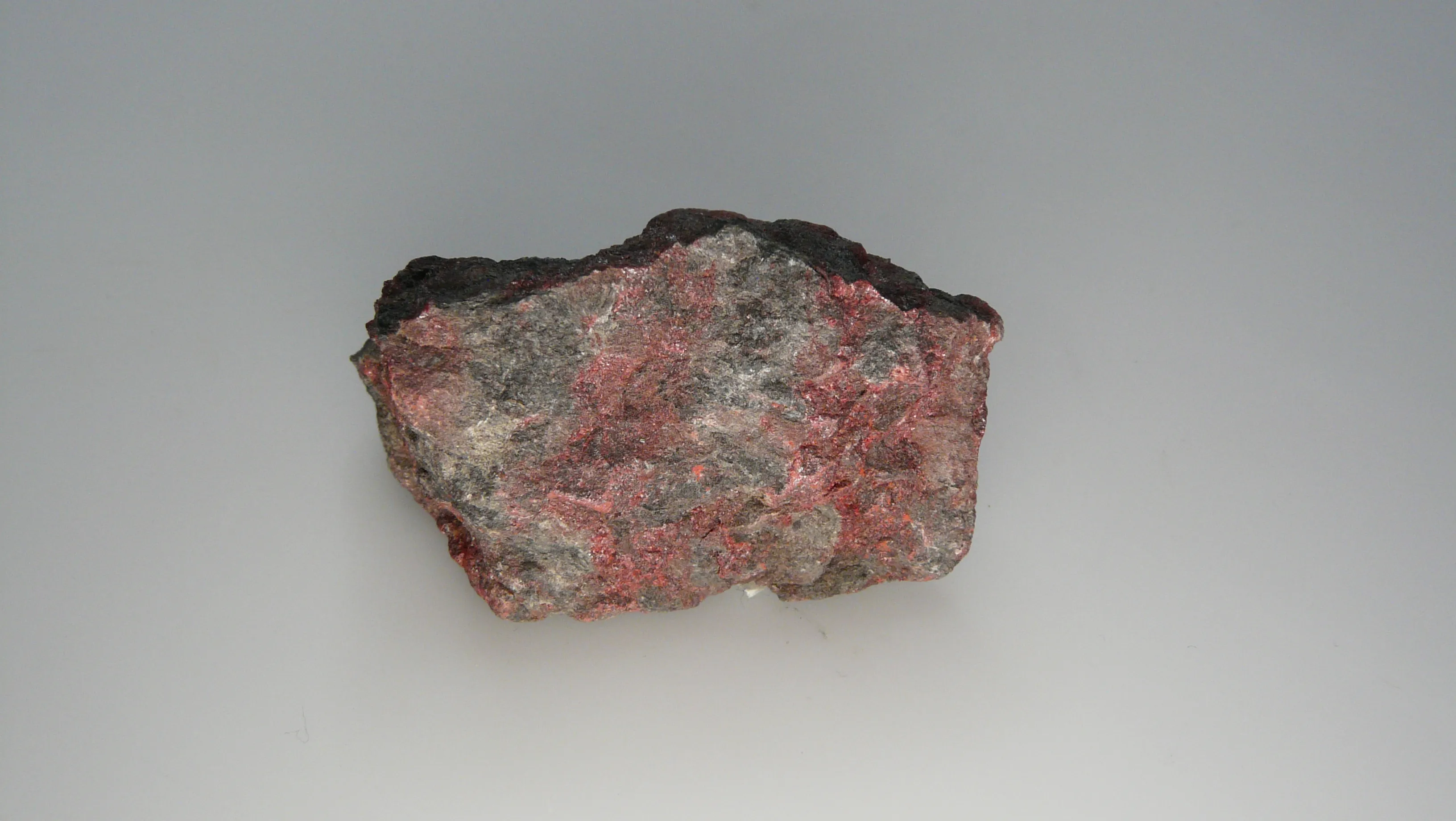
| ID | 278 | |
|---|---|---|
| Mineral | Cinnabar | |
| Location | Almaden - California - Spain | |
| Fluorescence | LW-UV: close SW-UV: close |
|
| Mindat.org |
View Cinnabar information at mindat.org |
|
Mindat data
| ID | 1052 |
|---|---|
| Long ID | 1:1:1052:4 |
| Formula |
HgS
|
| IMA Status |
0 1 |
| Other Occurrences | low-temperature hydrothermal, in veins and sedimentary, igneous, and metamorphic host rocks |
| Industrial | Principal ore of mercury. Used as a cosmetic pigment in ancient times. |
| Diapheny | Transparent,Translucent |
| Cleavage |
Perfect |
| Tenacity | sectile |
| Colour | Tint or shade of red; cochineal red, brownish red, silvery dark red; silvery-grey |
| Hardness (min) | 2.0 |
| Hardness (max) | 2.5 |
| Luminescence | None |
| Lustre | Adamantine splendent in dark-colored crystalline variteties or earthy to dull in friable varieties |
| About the name | The origin of the name is still unclear, but beyond doubt oriental (Lüschen, 1979, p. 348). The first name used for this mineral in a European lapidary, is the ancient Greek word "κιννάβαρι" (kinnàbari), mentioned by Theophrastus (c. 371 – c. 287 BC) in his treatise "Περὶ λίθων" (On Stones). |
| Streak | Red-brown to scarlet |
| Crystal System | Trigonal |
| Cleavage Type | Perfect |
| Fracture type | Irregular/Uneven,Sub-Conchoidal |
| Morphology |
Rhombohedral crystals (to 10 cm), thick tabular {0001}, stout to slender prismatic || |
| Twinning | Simple contact twins; plane {0001}, axis [0001] |
| UV | None. |
| Thermal Behaviour | transition to the β phase (metacinnabar) occurs in the 673-698 K range |
| key_elements |
0 |
| shortcode_ima | Cin |
Details
Price: € 10
Dimensions: Not registered
Weight: Not registered
Visibile in overview:
Notes:
| Symbol | Element | |
|---|---|---|
| Hg | Mercury |

|
| S | Sulfur |