Calcite, Chalcopyrite and Dolomite
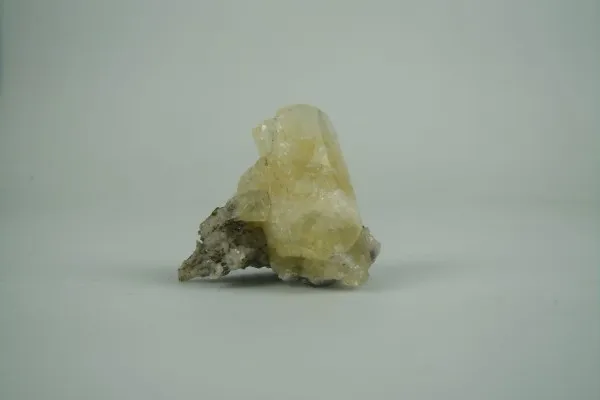
| ID | 247 | |
|---|---|---|
| Mineral |
Calcite
Chalcopyrite Dolomite |
|
| Location | Joplin Mine - Apache Gulch - Arizona - United States of America | |
| Fluorescence | LW-UV: close SW-UV: close |
|
| Mindat.org |
View Calcite information at mindat.org View Chalcopyrite information at mindat.org View Dolomite information at mindat.org |
|
Mindat data
| ID | 859 |
|---|---|
| Long ID | 1:1:859:4 |
| Formula |
Ca(CO3)
|
| IMA Status |
0 1 |
| Other Occurrences | Found in most geologic settings and as a later forming replacement mineral in most other environments in one form or another, it is most common as massive material in limestones and marbles. It forms as chemical sedimentary deposits as limestone, can be regionally or contact metamorphosed into marbles and rarely forms igneous rocks (carbonatites). Also is a common gangue mineral in hydrothermal deposits. |
| Industrial | Mined extensively for a wide variety of uses ranging from lime (cement) to limestone and marble building stones and aggregates, agricultural supplements and optical calcite. |
| Diapheny | Transparent,Translucent |
| Cleavage |
Perfect on |
| Tenacity | brittle |
| Colour | White, Yellow, Red, Orange, Blue, Green, Brown, Gray etc. |
| Hardness (min) | 3.0 |
| Hardness (max) | 3.0 |
| Luminescence | Fluorescent |
| Lustre | Vitreous |
| About the name | Ancient name. Named as a mineral by Gaius Plinius Secundus (Pliny the elder) in 79 from Calx, Latin for Lime. |
| Streak | White |
| Crystal System | Trigonal |
| Cleavage Type | Perfect |
| Fracture type | Conchoidal |
| Morphology | Over 800 different forms have been described. Most commonly as acute rhombohedrons or prismatic with scalenohedral terminations, or combinations of the two. |
| Twinning |
At least four twin laws have been described, the most common being when the twin plane and the composition plane are |
| UV | May be fluorescent under LW UV, mid-range UV or SW UV as well as under X-rays, cathode rays and even sunlight, in a number of colors and shades, commonly an intense red under SW with Mn as an activator (such as at Franklin, New Jersey, USA, and Långban in Sweden. |
| Comment Luster | Pearly on cleavage and {0001}. Can be dull or earthy in chalk variety. |
| shortcode_ima | Cal |
| Group | Calcite Group |
| ID | 955 |
|---|---|
| Long ID | 1:1:955:7 |
| Formula |
CuFeS2
|
| IMA Status |
0 1 |
| Other Occurrences | It is the most abundant copper-bearing mineral and is widespread. It is a primary mineral in hydrothermal veins, disseminations, and massive replacements; the principal copper mineral of porphyry copper deposits. |
| Industrial | It is the principal ore of copper. |
| Discovery Year | 1725 |
| Diapheny | Opaque |
| Cleavage | Indistinct on {011}, sometimes distinct. |
| Tenacity | brittle |
| Colour | Brass yellow, often with an iridescent tarnish. |
| Hardness (min) | 3.5 |
| Hardness (max) | 4.0 |
| Luminescence | None |
| Lustre | Metallic |
| About the name | Named in 1725 by Johann Friedrich Henckel from the Greek "chalkos", copper, and "pyrites", strike fire. |
| Streak | Greenish black |
| Crystal System | Tetragonal |
| Cleavage Type | Poor/Indistinct |
| Fracture type | Irregular/Uneven |
| Morphology | Typically found as equant to wedge-shaped pseudo-tetrahedral dispenoidal crystals, often modified by tetragonal scalenohedral faces. Mostly found massive or in disseminated grains and major deposits of such material are known. |
| Twinning | Twinned on {112} and {012}, penetration or cyclic. |
| key_elements |
0 |
| shortcode_ima | Ccp |
| Group | Chalcopyrite Group |
| ID | 1304 |
|---|---|
| Long ID | 1:1:1304:4 |
| Formula |
CaMg(CO3)2
|
| IMA Status |
0 1 |
| Other Occurrences | An important sedimentary and metamorphic mineral found as the principal mineral in dolostones and metadolostones, and as an important mineral in limestones and marbles where calcite is the principal mineral present. Also found as a hydrothermal vein mineral, forming crystals in cavities; and found in serpentinites and similar rocks. |
| Industrial | A major source of magnesium, particularly for agricultural and pharmaceutical applications. |
| Discovery Year | 1791 |
| Diapheny | Transparent,Translucent |
| Cleavage |
On |
| Tenacity | brittle |
| Colour | Colourless, white, gray, reddish-white, brownish-white, or pink; colourless in transmitted light |
| Hardness (min) | 3.5 |
| Hardness (max) | 4.0 |
| Luminescence | None |
| Lustre | Vitreous |
| About the name | Named in 1791 by Nicolas Théodore de Saussure in honor of the French mineralogist and geologist, Déodat (Dieudonné) Guy Silvain Tancrède Gratet de Dolomieu [June 24, 1750, Dolomieu, near Tour-du-Pin, Isère, France - November 26, 1801, Château-Neuf, Sâone-et-Loire, France]. de Dolomieu wrote numerous books on observations on geology, notably about the Alps and Pyrenees, in addition to theoretical books about the internal structure of the Earth. He discovered a specimen of what would eventually be called dolomite during his participation in Napoleon Bonaparte's expedition into Egypt in 1798. |
| Streak | White |
| Crystal System | Trigonal |
| Cleavage Type | Perfect |
| Fracture type | Sub-Conchoidal |
| Morphology |
Crystals typically rhombohedral with |
| Twinning |
On {0001}, common with re-entrant angles around the middle edges; on |
| UV | Some types fluoresce white, blue white, creamy yellow, etc. in either SW or LW UV. Manganoan varieties may fluoresce pale pink through intense red, but weaker in long wave. |
| Comment Luster | Usually not vitreous or sub-vitreous |
| shortcode_ima | Dol |
| Group | Dolomite Group |
Details
Price: € 35
Dimensions: Not registered
Weight: 77 g
Visibile in overview:
Notes:
| Symbol | Element | |
|---|---|---|
| C | Carbon | |
| Ca | Calcium | |
| Cu | Copper | |
| Fe | Iron | |
| Mg | Magnesium | |
| O | Oxygen | |
| S | Sulfur |