Skutterudite, Löllingite and Safflorite
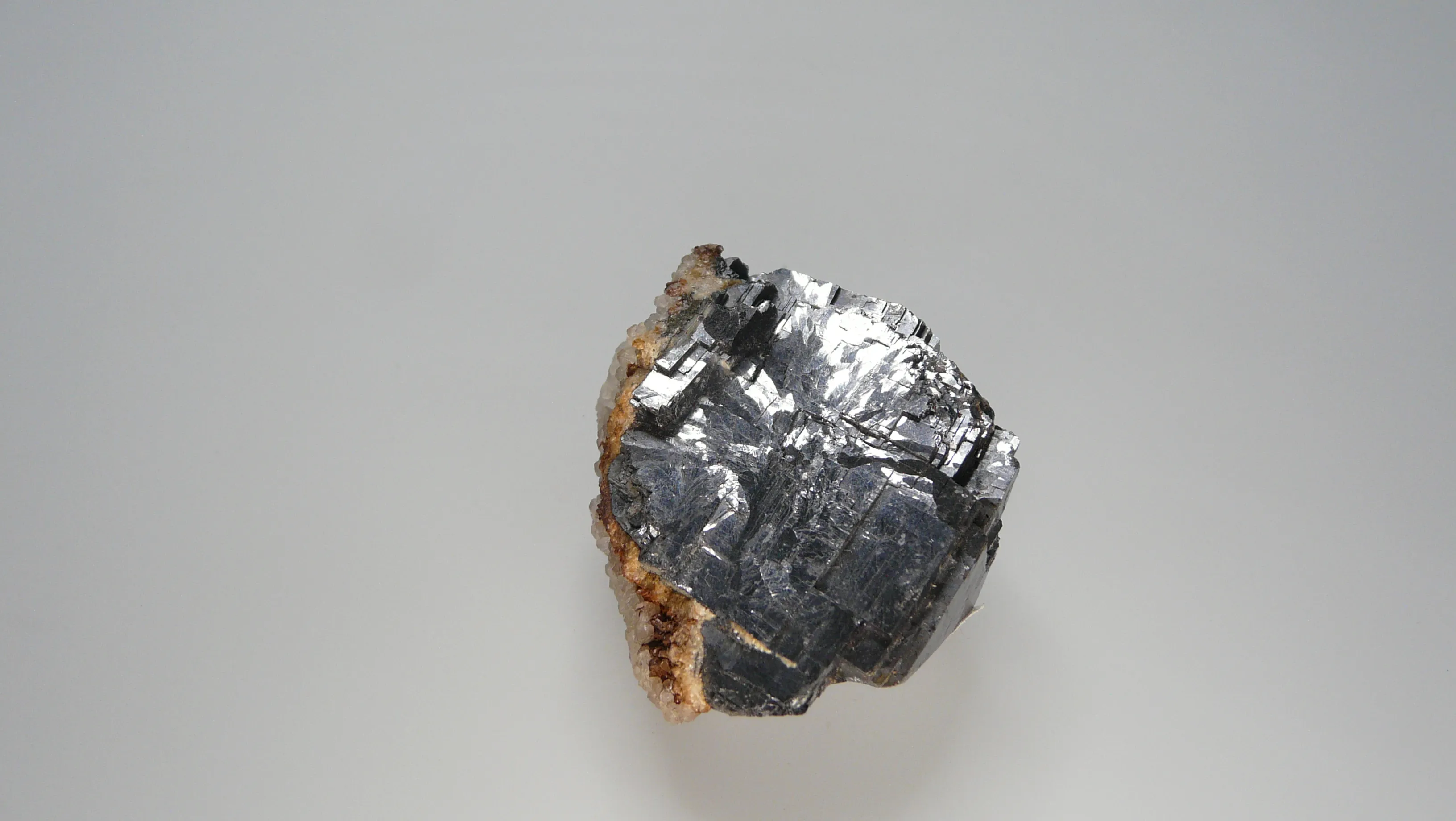
| ID | 153 | |
|---|---|---|
| Mineral |
Skutterudite
Löllingite Safflorite |
|
| Location | Hasserode - Wernigerode - Saxony-Anhalt - Germany | |
| Fluorescence | LW-UV: close SW-UV: close |
|
| Mindat.org |
View Skutterudite information at mindat.org View Löllingite information at mindat.org View Safflorite information at mindat.org |
|
Mindat data
| ID | 3682 |
|---|---|
| Long ID | 1:1:3682:1 |
| Formula |
CoAs3
|
| IMA Status |
0 1 |
| Other Occurrences | Moderate to high temperature hydrothermal veins |
| Discovery Year | 1845 |
| Diapheny | Opaque |
| Cleavage | Distinct on {001}{111} in traces on {011} |
| Colour | Tin-white to silver-gray, gray (tarnished) |
| Hardness (min) | 5.5 |
| Hardness (max) | 6.0 |
| About the name | Named in 1845 by Wilhelm Karl von Haidinger after its discovery locality, Skutterud, Modum, Norway. The earliest name that possibly refers to any skutterudite-like material, cobaltum eineraceum, was introduced by Georgius Agricola in 1529. Wallerius used several names for a skutterudite-like mineral (kobaltglants, kobaltmalm, minera cobalti cinerea, cobaltum arsenico mineralisatum). Named speiskobalt by Werner (see Hausmann, 1813), but also seemingly equally applied to safflorite and smaltite. Arsenikkobaltkies was used by Karl Johann August Theodor Scheerer for Norwegian skutterudite in 1837 and Arsenikkobalt was used in 1852 by Gustav Rose. |
| Streak | Black |
| Crystal System | Isometric |
| Cleavage Type | Distinct/Good |
| Fracture type | Irregular/Uneven,Conchoidal |
| Morphology | Cubic crystals |
| Twinning | On {112} as sixlings, reported on {011} |
| key_elements |
0 1 |
| shortcode_ima | Skt |
| Group | Skutterudite Subgroup |
Details
Price: € 20
Dimensions: Not registered
Weight: 155 g
Visibile in overview:
Notes:
| Symbol | Element | |
|---|---|---|
| As | Arsenic |

|
| Co | Cobalt |
|