Cerussite and Anglesite
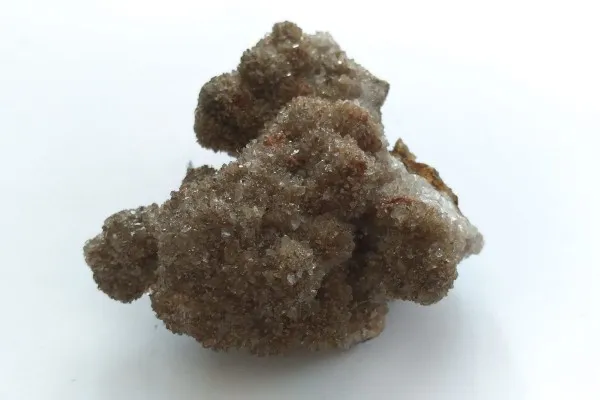
| ID | 48 | |
|---|---|---|
| Mineral |
Cerussite
Anglesite |
|
| Location | Chaillac Mine - Chaillac - Centre-Val de Loire - France | |
| Fluorescence | LW-UV: close SW-UV: close |
|
| Mindat.org |
View Cerussite information at mindat.org View Anglesite information at mindat.org |
|
Mindat data
| ID | 934 |
|---|---|
| Long ID | 1:1:934:4 |
| Formula |
Pb(CO3)
|
| IMA Status |
0 1 |
| Other Occurrences | Commonly occurs in the upper oxidized zones of base metal deposits, especially lead-silver deposits. |
| Industrial | Ore of lead, and often also of silver. |
| Diapheny | Transparent,Translucent |
| Cleavage | On {110} and {021} distinct; on {010} and {012} in traces. |
| Tenacity | very brittle |
| Colour | Colourless, white, gray, blue, or green; colourless in transmitted light |
| Hardness (min) | 3.0 |
| Hardness (max) | 3.5 |
| Luminescence | None |
| Lustre | Adamantine |
| About the name | Named in 1845 by Wilhelm Karl von Haidinger from the Latin, cerussa, meaning "white lead." |
| Streak | White |
| Crystal System | Orthorhombic |
| Cleavage Type | Distinct/Good |
| Fracture type | Conchoidal |
| Morphology |
Crystal morphology extremely varied. Simple crystals often tabular {010} and elongated [001] or [100]. Also equant or dipyramidal and then pseudo-hexagonal. Rarely acicular [001] or very thin tabular {001}. {010} and {0kl} usually striated [100]; {111} often striated |
| Twinning | Almost universal. Most commonly on {110}, as twin lamellae or as contact twin types producing stellate pseudo-hexagonal groups or reticulated aggregates. On {130} less common, mainly as contact twins with a heart-shaped outline. Both laws may occur simultaneously. |
| UV | Occasionally fluorescent under SW and MW UV lights showing a yellow color. Yellow/white under SW UV light, but less intense. |
| Thermal Behaviour | Breaks down to a basic carbonate at about 300°, which, in turn, decomposes to PbO at about 500° (?). According to Grisafe & White (1964) cerussite decomposes: - at ca. 204 °C, according to reaction: 3PbCO3 ⇌ 2Pb2O(CO3) + CO2 Further reactions: - at ca. 283 °C: 2Pb3O(CO3)2 ⇌ 3Pb2O(CO3) + CO2 - at 373 °C: 3Pb2O(CO3)⇌ 2Pb3O2(CO3) + CO2 - at 435 °C: Pb3O2(CO3) ⇌ 3PbO + CO2 |
| key_elements |
0 |
| shortcode_ima | Cer |
| Group | Aragonite Group |
| ID | 233 |
|---|---|
| Long ID | 1:1:233:2 |
| Formula |
Pb(SO4)
|
| IMA Status |
0 1 |
| Industrial | Ore of lead. |
| Discovery Year | 1832 |
| Diapheny | Transparent,Translucent,Opaque |
| Cleavage | Good on {001}, distinct on {201}; on {010} in traces. |
| Tenacity | brittle |
| Colour | Colorless to white, often tinted grey, yellow, green or blue; colourless in transmitted light. |
| Hardness (min) | 2.5 |
| Hardness (max) | 3.0 |
| Luminescence | Often flouresces yellow under LW UV. |
| Lustre | Adamantine to resinous, or vitreous. |
| About the name | Named in 1832 by Francois Sulpice Beudant for the type locality, the Parys Mine on the Island of Anglesey (Ynys Môn) in Wales, U.K. |
| Streak | Colorless |
| Crystal System | Orthorhombic |
| Cleavage Type | Distinct/Good |
| Fracture type | Conchoidal |
| Morphology | Crystals frequently thin to thick tabular {001}, commonly with {210}, {101} and rhomboidal in outline. Also extended [100] or [010] at times. Prismatic [001] with large {210} and vertically striated; prismatic [100], with large {011}; stout prismatic [010], with {101}, {102}; tabular {100}; equant or pyramidal with {111}, {211} or otherwise. {100} and {210} commonly striated [001]. Massive; granular to compact; nodular; stalactitic. |
| Twinning | None observed. |
| UV | Shades of yellow and golden-yellow (UV). |
| Thermal Behaviour | Inverts to a monoclinic polymorph at about 864°C. Decomposes between 900°C and 1000°C. |
| key_elements |
0 |
| shortcode_ima | Ang |
| Group | Baryte Group |
Details
Price: € 10
Dimensions: Not registered
Weight: Not registered
Visibile in overview:
Notes:
| Symbol | Element | |
|---|---|---|
| C | Carbon | |
| O | Oxygen | |
| Pb | Lead |

|
| S | Sulfur |