Magnesio-hornblende and Actinolite
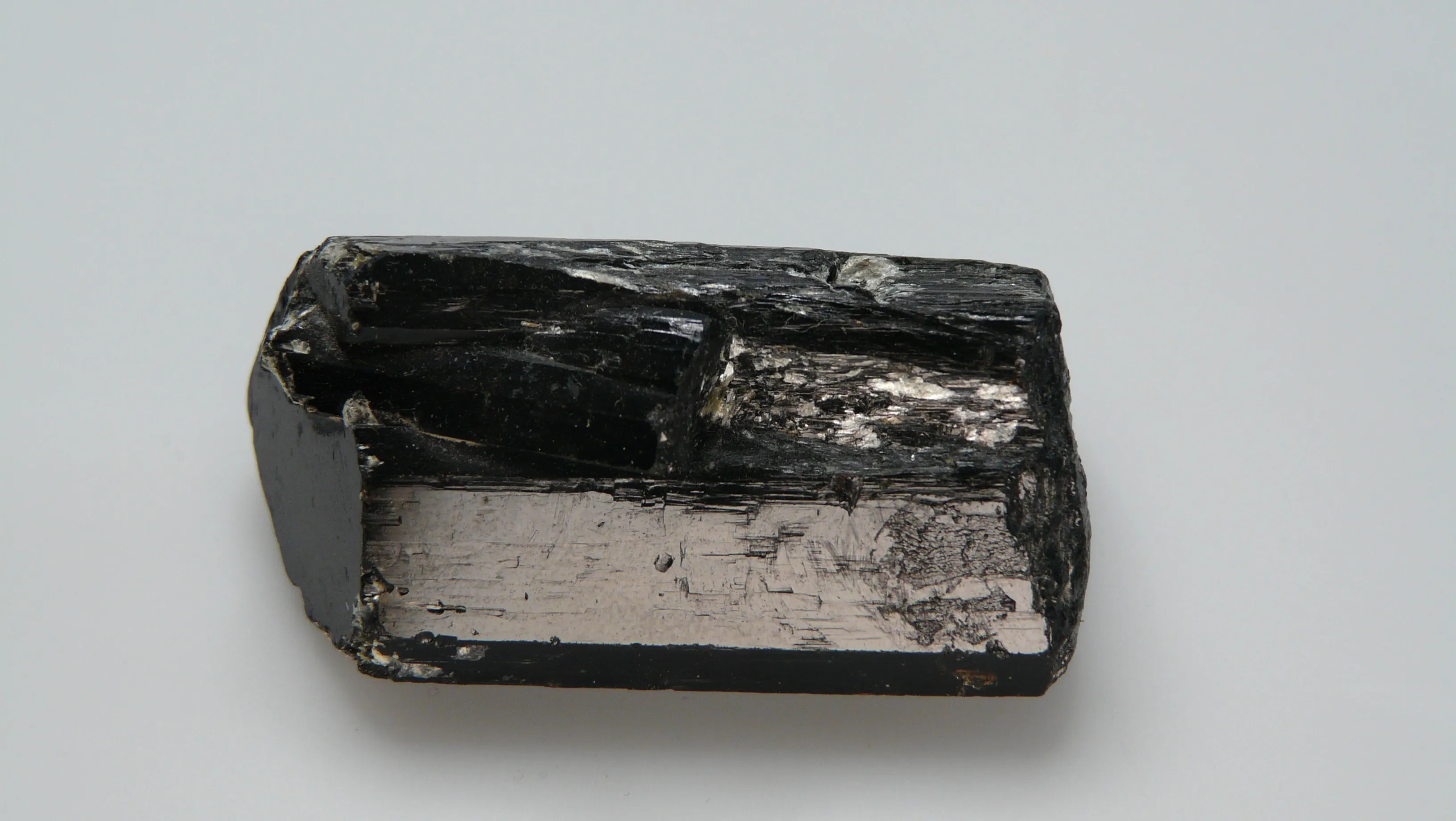
| ID | 16 | |
|---|---|---|
| Mineral |
Magnesio-hornblende
Actinolite |
|
| Location | Evje - Aust-Agder - Norway | |
| Fluorescence | LW-UV: close SW-UV: close |
|
| Mindat.org |
View Magnesio-hornblende information at mindat.org View Actinolite information at mindat.org |
|
Mindat data
| ID | 2524 |
|---|---|
| Long ID | 1:1:2524:5 |
| Formula |
◻Ca2(Mg4Al)(Si7Al)O22(OH)2
|
| IMA Status |
0 |
| General Appearance | holotype specimen is a friable block of subhedral to anhedral magnesio hornblende crystals up to a few millimeters. |
| Occurrence | Sand dunes |
| Cleavage | on {110} |
| Colour | Medium green to dark green to green-black to black, brown |
| Hardness (min) | 5.0 |
| Hardness (max) | 6.0 |
| Luminescence | Nonfluorescent |
| Lustre | Vitreous |
| About the name | For its high magnesium content, indicating Mg2+ as a dominant cation and relationship with hornblende. The latter name hornblende was first used by 1789 by Abraham Gottlieb Werner from an old German term for dark minerals with no ore value and from "blende", meaning to deceive in allusion to it occurring in ore deposits but not yielding any metal. |
| Streak | Pale grey-green, grey-white |
| Crystal System | Monoclinic |
| Cleavage Type | Perfect |
| Publication Year | 2018 |
| shortcode_ima | Mhbl |
| Group | Hornblende Root Name Group |
| ID | 18 |
|---|---|
| Long ID | 1:1:18:1 |
| Formula |
◻Ca2(Mg4.5-2.5Fe2+0.5-2.5)Si8O22(OH)2
|
| IMA Status |
0 1 |
| Other Occurrences | Produced by low-grade regional or contact metamorphism of magnesium carbonate, mafic, or ultramafic rocks; Also in glaucophane-bearing blueschists. Occurs in many localities. In Austria, on Mt. Greiner, Zillertal, and at Untersulzbachtal. From Zermatt, Valais, Switzerland. At Snarum and Arendal, Norway. From the Ural Mountains, Russia. In the USA, from Gouverneur, St. Lawrence Co., New York; Franklin and Newton, Sussex Co., New Jersey; Chester, Windsor Co., Vermont; in the Fairfax quarry, Centreville, Fairfax Co., Virginia; Crestmore, Riverside Co., California; at Salida, Chaffee Co., Colorado. Nephrite jade occurs, in the USA, south and east of Lander, Fremont Co., Wyoming; north from Cape San Martin, Monterey Co., California; and around Jade Mountain, near the Kobuk River, Alaska. Along the Fraser River, British Columbia, Canada. Around Mt. Cook, South Island, New Zealand. Fine material from the Kunlun Mountains, Sinkiang Uighur Autonomous Region, China. |
| Diapheny | Transparent,Translucent |
| Cleavage | on {110} |
| Tenacity | brittle |
| Colour | Green, green-black, grey-green, or black |
| Hardness (min) | 5.0 |
| Hardness (max) | 6.0 |
| Luminescence | Nonfluorescent |
| Lustre | Vitreous |
| About the name | Named in 1794 by Richard Kirwan from the Greek ακτίνα ("aktina") for "ray" and λίθος ("lithos") for "stone" in allusion to the fibrous nature of the original specimens. Type locality not known. |
| Streak | White |
| Crystal System | Monoclinic |
| Cleavage Type | Distinct/Good |
| Fracture type | Splintery |
| Twinning | simple or lamellar, common parallel {100}; lamellar, less common parallel {001} |
| Publication Year | 1794 |
| shortcode_ima | Act |
| Group | Actinolite Root Name Group |
Details
Price: € 10
Dimensions: Not registered
Weight: 43 g
Visibile in overview:
Notes:
| Symbol | Element | |
|---|---|---|
| Al | Aluminium | |
| Ca | Calcium | |
| Fe | Iron | |
| H | Hydrogen | |
| Mg | Magnesium | |
| O | Oxygen | |
| Si | Silicium |